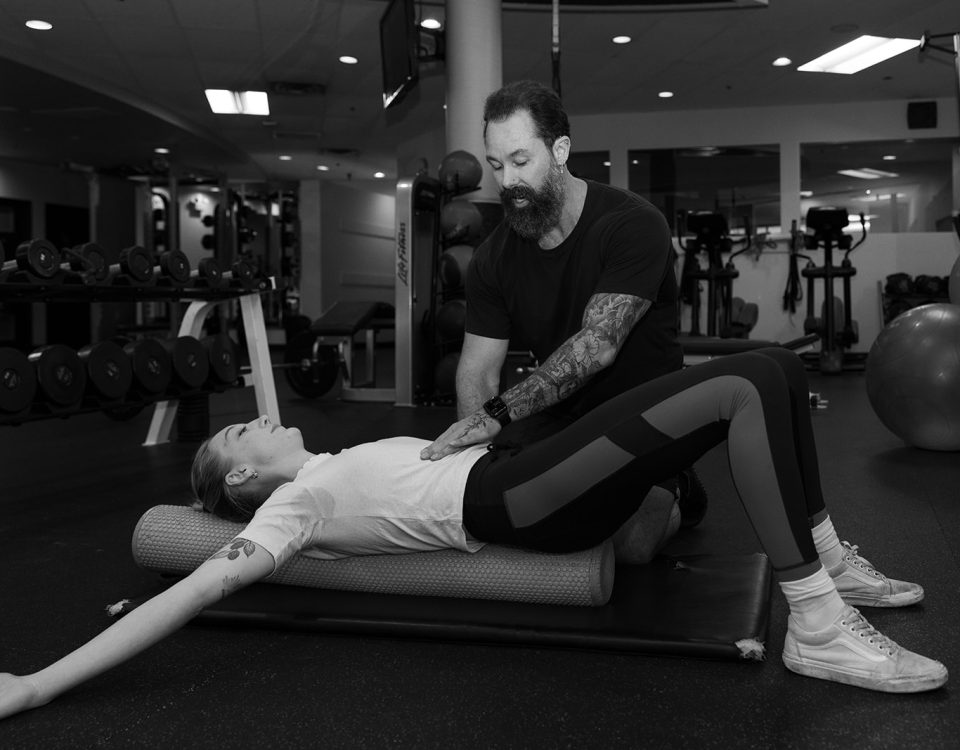
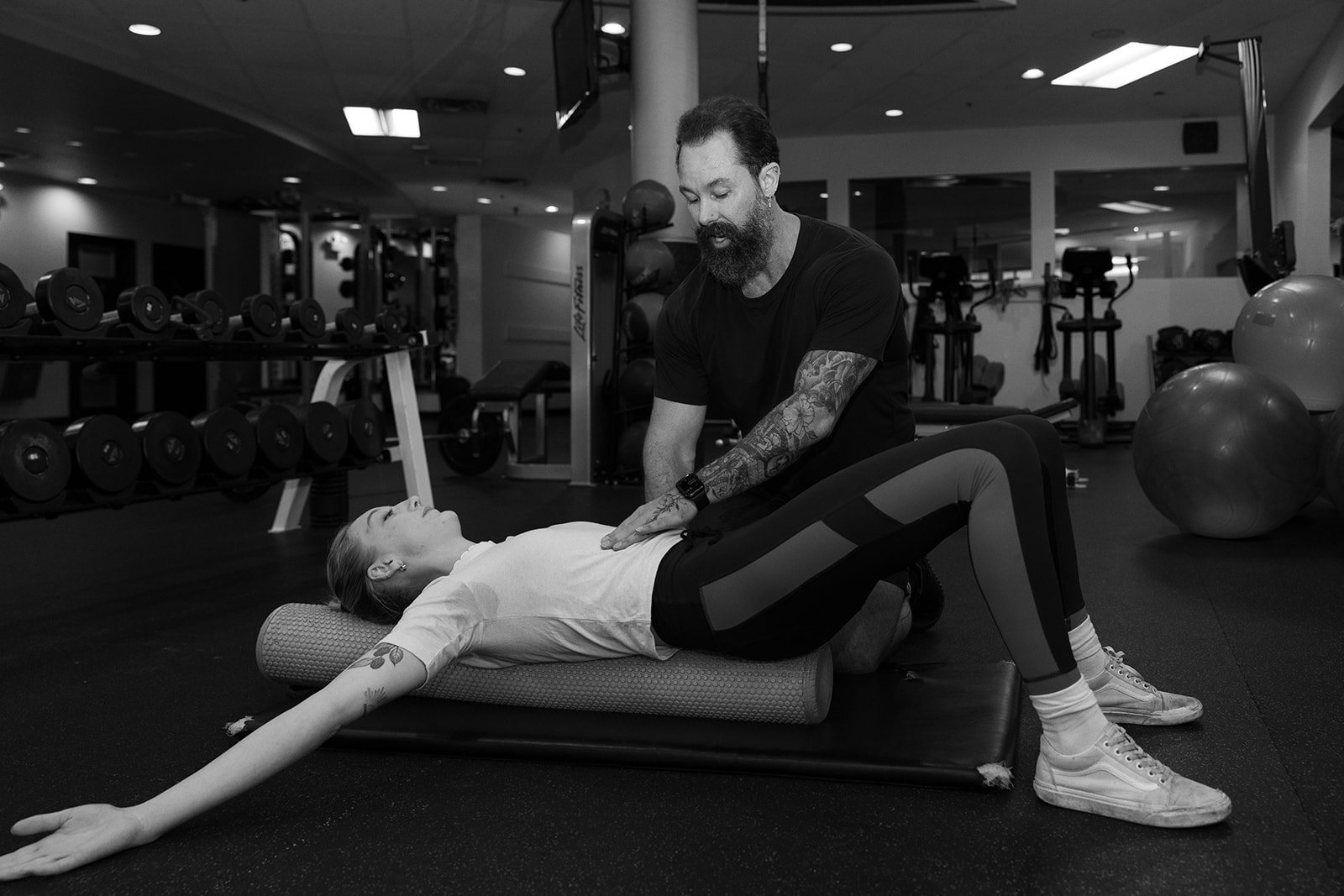
It is not one or the other. A physio can manually restore motion. A trainer teaches you to own that range under frequent practice. Clinical visits are often episodic; lasting change needs movement most days of the week — which is why TurnFit often works alongside physiotherapists on shared clients.
By David Turnbull, BCRPA Certified Personal Trainer & Founder, TurnFit Personal Trainers
You wake up careful. Not dramatic-injury careful — midlife careful. Shoulder at the top shelf. Low back after Outlook. Knee that negotiates stairs like it has a union.
So you Google: physiotherapist vs personal trainer — as if you must pick a team. Stretch-and-ice on one side. Bootcamp tomorrow on the other. Neither sounds like you.
Women 3555 in Vancouver (Kitsilano, Downtown, North Shore) and online across Canada: this is for you. Men welcome.
Memorable line: a physiotherapist can manually move you — but if nobody teaches you how to move and load yourself, you will not fix the problem forever. Manual therapy without progressive movement education is temporary relief.
Lasting change is owning the pattern under load – often enough that desk life does not undo it between appointments.
TurnFit is not physiotherapy and never replaces it. We train. We refer. We often work alongside your physio – shared clients, notes and clearance respected, load progressing while clinical care continues when you still need it.
Related: pain-free personal training for Vancouver women · already work out, still stuck after 40.
TL;DR
Partners in a pathway: manual restore – learn to move – load and strengthen.
- Physio first for clinical signals (injury/surgery, night pain, travelling numbness/tingling, unexplained swelling, sudden weakness, physician-flagged issues). Hands-on care can unlock motion you cannot find alone.
- Trainer next – or alongside when cleared – teaches ROM and posture via dynamic drills/stretches, then reinforces with resistance so the pattern survives desk, kids, and stairs.
- Both (sequence or concurrent) is often best after 40. Physio unlocks and may continue; trainer owns progressive load. Shared clients beat solo silos.
- Cadence matters: physio is often episodic; training needs frequent practice (about 5 days of stimulus via sessions + homework). Great clinical care alone cannot outpace five desk days.
Stretches alone are not a fix – mobility without strength fades by Wednesday. Loading makes the new range usable.
B.C. plain language: physio = regulated clinical rehab (including manual therapy); kinesiologist often bridges exercise therapy; personal trainer coaches movement skill and load. TurnFit: Kitsilano (3311 W Broadway) · Downtown (180 W Georgia) · online Canada.
Soft next step: intro / assessment conversation.
Why this question hits harder after 40
Because midlife pain sits between acute injury and just get a gym membership – and binary advice fails.
After 40 – especially through perimenopause – sleep flickers, recovery slows, desk hours accumulate. Canadian care rarely flags early muscle loss until function gets loud.
You land in the emotional limbo: not acute enough for endless rehab, too guarded for a bootcamp that treats caution like a character flaw. Sore, not shattered. Tired of rest and no pain no gain.
Funny but true: cracked, needled, or mobilized – new human for about 48 hours – then Outlook reinstalls the old pattern. Physio did not fail. The week between episodic visits never got filled with owned movement and load.
Physio vs personal trainer vs both – complementary, not competitive
| Physiotherapist | Personal trainer | Partners (common after 40) | |
|---|---|---|---|
| Primary job | Assess, treat, rehabilitate – including manual therapy that can restore motion with hands-on treatment | Teach proper ROM and posture via dynamic drills/stretches, then strengthen those areas under resistance | Manual unlock – learn the pattern – load so it sticks in real life |
| Typical cadence | Episodic clinical visits – maybe weekly when problems are very bad; once settled, often closer to every six weeks | Frequent practice – think five days per week of movement/stimulus plus homework | Physio touchpoints plus training week filled between them – concurrent, not either/or |
| Best when | Acute injury, post-op, red flags, clinical rehab, pelvic-floor care, motion that will not unlock alone | Cleared or stable enough to train; deconditioning; fear of load; desk posture; post-physio handoff; longevity strength | Physio unlocks and may continue; trainer owns load – sequence or concurrent partnership |
| Without the other | Even great visits can lose to desk life if nobody fills the other days | Loading into unresolved clinical issues can irritate tissue | Skip either chapter and the grey zone renews the lease |
| Not a substitute for | Frequent movement practice and progressive overload | Diagnosis, imaging interpretation, clinical rehab, medical advice | Ego on either side |
| TurnFit’s lane | We refer – we do not pretend to be physio | Yes – posture-first, pain-aware personal training | We often train alongside your physio: shared clients, notes respected, load progressed while clinical care continues |
Pathway in one breath: physio can manually move you – trainer teaches you to move yourself – resistance makes the new range usable under fatigue. That pathway can be sequential or side-by-side – TurnFit is built for both.
How often? Clinical touchpoints vs a training week
It is not one or the other – and the calendars are not the same job.
What we typically see with physiotherapy: when things are very bad, visits might be about once a week; once settled, often closer to every six weeks. Episodic clinical care – valuable, skilled, not designed to babysit every desk hour.
What a training body usually needs: frequent practice – on the order of about 5 days a week of movement/stimulus. At TurnFit that often means a couple of coached sessions in person or online, plus homework the other days. Coaching sessions are the eyes; homework is where the week gets filled.
Thesis you can feel in your shoulders by Thursday: physio visits alone – even excellent ones – cannot outpace a week of desk life if you are only seen weekly or every six weeks. Lasting change needs guided movement and loading between those clinical touchpoints. That is why people so often do both alongside each other.
Not a medical protocol. Not a price list. Just the frequency gap midlife adults feel after a great appointment and a month of Outlook.
When physio first (keep the red flags honest)
Clinical signals – not lifestyle friction. Go clinician / physiotherapist first if you notice recent trauma or surgery; night pain; travelling numbness/tingling or sudden weakness; unexplained swelling/heat; pelvic-floor concerns that worry you; or a physician flag for rehab/clearance before loading.
A good trainer would rather lose a sale than train through a red flag. Unsure? Err clinical. That is partnership, not surrender.
When a personal trainer is the smarter next (or concurrent) door
Capacity, confidence, and graded exposure – not untreated acute pathology.
Trainer-led work often fits if you are cleared or stable enough to train; deconditioned after gentle forever; stuck in desk posture; scared of load after a scare; finished physio without owning the pattern; or already working out and still soft/stuck. Sometimes that starts while you still see your physio – with clearance.
What we do: dynamic drills and stretches to teach range and posture, then progressive resistance so the pattern holds when life is loud. Endless rest after 40 can become deconditioning. Protect so hard you never rebuild the capacity that protects you on Kits sidewalks, stairs, and YVR luggage.
Grey zone and the Wednesday problem
Not acute enough for endless rehab. Too guarded for bootcamp. That limbo is where many women 35-55 live. Winning move: both – sequence or concurrent – physio when something is new, weird, or loud; pain-aware training as the long game.
And stretches are not a fix. Mobility without strength fades by Wednesday. Manual work opens a door; drills show the hallway; resistance makes the hallway your house. Skip load and you keep renting the 48-hour miracle by the session. You are not broken – you may be under-taught for the body you have now.
Kinesiologist vs physio vs personal trainer in B.C.
Different scopes. Complementary tools. Plain language, not legal advice.
Physiotherapist – regulated clinician; often includes manual therapy (hands-on restore). Acute, post-op, red flags – not primarily your decade-long strength coach. Kinesiologist – exercise therapy bridge; useful, still not a physio substitute when you need physio. Personal trainer (including TurnFit) – teaches ROM/posture via dynamic drills and stretches, then strengthens under resistance. Look for BCRPA, midlife literacy, screening, and referral honesty. Cannot diagnose or replace physiotherapy.
Hiring lens: personal trainer Kitsilano – how to choose.
Will training make it worse?
Sometimes yes – if the plan is stupid. Often no – if the plan is literate graded exposure.
Fear is rational after the 48-hour miracle fades and a gym says just push through. Pain-aware training treats pain as information: screen first; separate sore from sharp; change range, load, or tempo before quitting the goal; progress when form and symptoms allow; refer out when patterns look clinical. No honest coach guarantees zero discomfort forever. What we refuse is theatrical suffering sold as toughness.
The handoff: I finished physio – now what?
The chapter clinics and gyms both drop. Many people discharge still scared of load. Without graded exposure, cleared becomes careful forever.
And it is not only a baton pass. TurnFit often works alongside physiotherapists on shared clients – teaching ROM, posture, and load inside what is cleared, sometimes while clinical visits continue on their episodic cadence. We respect notes. We do not replace their care. We fill the days the clinic never sees.
Partnership job: honour clearance; re-teach ROM and posture; add resistance so the pattern holds; send you back without ego when symptoms change. Against physio: ignore the home sheet, ramp HIIT week one. With physio: turn the 48-hour miracle into a year.
Questions that make you smart in the room
Ask a physiotherapist: What am I cleared to load? Unlock via manual therapy, exercise, or both? What does a shared plan with a trainer look like? Which symptoms mean I come back sooner?
Ask a personal trainer: Do you work alongside physios and honour notes? How do you teach ROM/posture before heavier loads? What does graded exposure (sessions plus homework) look like in weeks 1-6? Are you claiming to replace clinical care? Walk if yes.
Territorial rooms are data. Partners leave room for the other chapter – sequential or concurrent.
A simple decision framework
- Red-flag or newly clinical? – physio first.
- Cleared or stable? – train inside that lane (handoff or concurrent).
- Capacity, fear, posture, stuck? – pain-aware training fills the week.
- Stretching forever, no load? – Wednesday problem.
- Need both? After 40, often yes. Episodic physio plus frequent practice/load. Ego for neither.
Where TurnFit fits – and what we will not do
TurnFit is premium, posture-first personal training for midlife women and men who want strength without new injury stories.
We do: screen; teach ROM and posture through dynamic work; strengthen under resistance; fill the week with coached sessions plus homework; work alongside physios on shared clients; honour notes and clearance; progress load while clinical care continues when needed; refer honestly; Kitsilano (3311 W Broadway) · Downtown (180 W Georgia) · online Canada-wide.
What TurnFit will not do: diagnose; prescribe; replace physiotherapy; claim miracle cures; ask you to quit your physio to prove loyalty. We train. We refer. We partner. Specialty interest in old injuries and desk stiffness is still not a clinical license.
Trust, once: 4.9, 240+ Google reviews, 8x Top Choice.
Quiet next step to map physio-first, trainer-alongside, or post-physio handoff: intro / assessment conversation. Outside Metro Vancouver, online coaching with form feedback is still not a physio substitute.
FAQ
Do I need a physio or a personal trainer after 40?
Often both – in sequence or concurrent. Red flags, acute issues, or post-surgery mean physio first. Cleared or stable enough to train means pain-aware training, sometimes alongside ongoing physio. Partners, not rivals. Not one or the other.
What is the difference between a kinesiologist, physio, and personal trainer in B.C.?
Physio is regulated clinical rehab including manual therapy. Kinesiologist is an exercise therapy bridge. Personal trainer teaches ROM, posture, and progressive load. Plain language, not legal advice.
Can I train if I still have nagging joint pain?
Often yes when red flags are absent and exposure is graded. See pain-free personal training for Vancouver women.
Will training make it worse?
Poor programming or ignoring physio restrictions can. We treat symptoms as information and refer out when needed.
I finished physio – do I still need a trainer?
Frequently yes – handoff or concurrent. Graded exposure (drills, resistance, and homework) is how the pattern sticks. Bring clearance and notes.
How often should I see a physio vs a trainer?
No single prescription. What we often see: physio weekly when very bad, then every 6 weeks once settled; training about 5 days of stimulus via a couple coached sessions plus homework. Different jobs – many people need both alongside each other.
Is TurnFit a physiotherapy clinic?
No. We train, refer, and often work alongside physios. We do not diagnose, prescribe, replace physio, or sell miracle cures.
What if I am in perimenopause and everything feels different?
Common – not a reason to quit strength. Pair clinical care when needed with progressive training. More: perimenopause strength training Vancouver.
Closing: pick the pathway, not a team jersey
You do not need a jersey. You need the right sequence – or the right side-by-side plan.
A physio can manually move you. That unlock matters. A trainer can teach you to move and load yourself often enough that five desk days do not erase one great clinical hour. At TurnFit that is often concurrent: shared clients, notes respected, a couple coached sessions plus homework while clinical care continues when you still need it.
Manual restore without ownership fades. Ownership without clinical triage when you need it is bravado. It is not one or the other.
If you are stuck in the midlife grey zone – careful, sore, finished or still in physio, and tired of 48-hour miracles – that is exactly who we train.
TurnFit – Kitsilano, Downtown Vancouver, Online Canada – pain-aware strength that plays well with physio
Map your pathway (physio-first, alongside, or post-physio handoff) in a short conversation: https://turnfit.ca/assessment
Disclaimer: Educational only – not medical advice. A personal trainer is not a physician, physiotherapist, or dietitian. TurnFit does not diagnose, prescribe, or replace clinical care. Seek medical or physiotherapy assessment for injuries, red flags, or conditions that need licensed clinicians.
Ready to Start Your Fitness Journey?
At TurnFit, we offer in-person personal training at our Kitsilano and Downtown Vancouver locations, online coaching programs with live Zoom calls, and online personal training across Canada. Check out our transparent pricing — no contracts, no hidden fees.
Book a Free 5-Minute Call →