TL;DR: The best personal trainer in Kitsilano holds a recognized certification (CSEP-CPT, NSCA-CPT, or ACE), runs a real movement assessment before selling you a package, and can explain exactly why an exercise is in your program. Expect to pay roughly $180–$350 per session in Vancouver for 1-on-1 in-person coaching, less for small group or online formats. Avoid anyone who skips the assessment, pushes a contract on the first call, or hands you the same program they give everyone else.
What Actually Makes a Personal Trainer Good in Kitsilano?
A good Kitsilano trainer combines a real certification, a structured assessment process, and the ability to adjust your program as your body responds. Location matters less than method — a trainer who understands your posture, your joints, and your schedule will outperform someone who just runs you through a generic circuit. Credentials tell you they passed a bar; assessments and adjustments tell you they’re actually paying attention to you.
Which Personal Trainer Certifications Should You Look For?
In Canada, the strongest signal is a nationally recognized certification, not a weekend course. Ask directly which one your trainer holds and how long they’ve held it — a real professional will answer in one sentence.
| Certification | Issuing Body | What It Signals |
|---|---|---|
| CSEP-CPT | Canadian Society for Exercise Physiology | Canada’s gold-standard certification; strong screening & programming standards |
| NSCA-CPT / CSCS | National Strength and Conditioning Association | Strong on strength training and periodization; CSCS is more advanced |
| ACE-CPT | American Council on Exercise | Solid generalist certification with behavior-change focus |
| Kinesiology degree | University (BKin/MKin) | Deeper anatomy/physiology background, though not a substitute for a CPT credential |
None of these alone guarantees a good coach. But if a trainer can’t name a real certifying body, that’s a red flag worth taking seriously.

What Are the Red Flags of a Bad Personal Trainer?
Most bad experiences with personal training come from a handful of repeatable warning signs, not bad luck. Watch for these before you sign anything.
- No assessment before selling a package. If they quote you a 12-session bundle before ever watching you move, they’re selling volume, not a plan.
- One-size-fits-all programming. Everyone gets the same circuit regardless of injury history, goals, or fitness level.
- Can’t explain “why.” Ask why an exercise is in your program. A real coach has an answer tied to your body; a weak one shrugs or repeats a marketing phrase.
- High-pressure contracts. Long lock-in periods with no trial and heavy pressure to sign on the first call.
- No posture or mobility screen. If pain, old injuries, and daily habits (like sitting at a desk) never come up, they’re not looking at the whole picture.
- Constant last-minute cancellations or rotating trainers. Inconsistency undermines the entire point of hiring a coach.
What Does a Real Fitness Assessment Look Like?
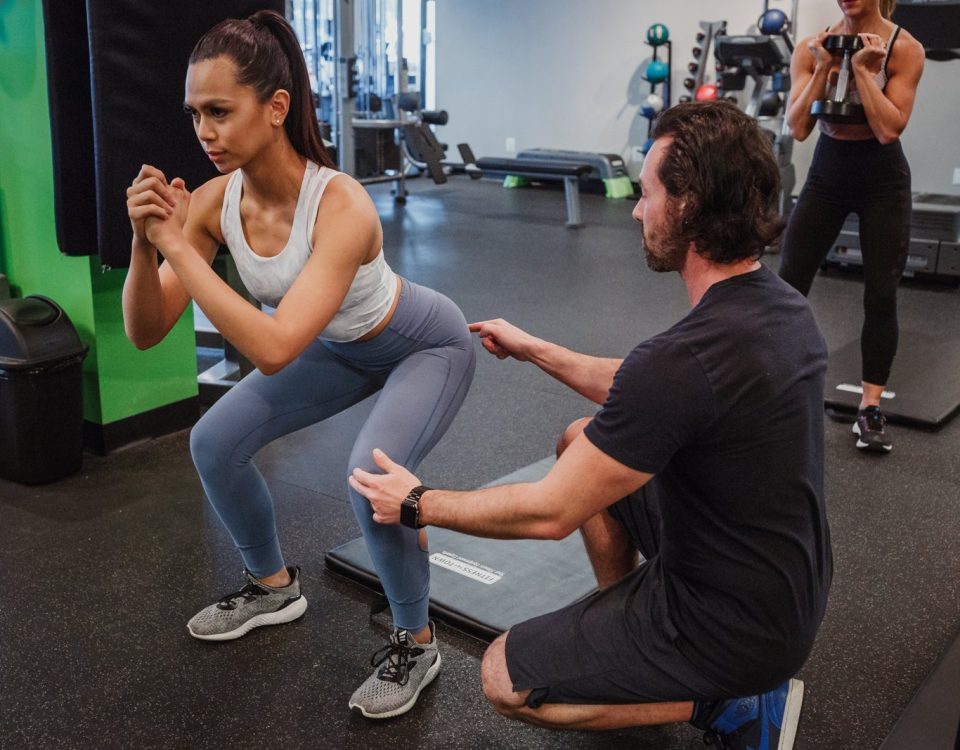
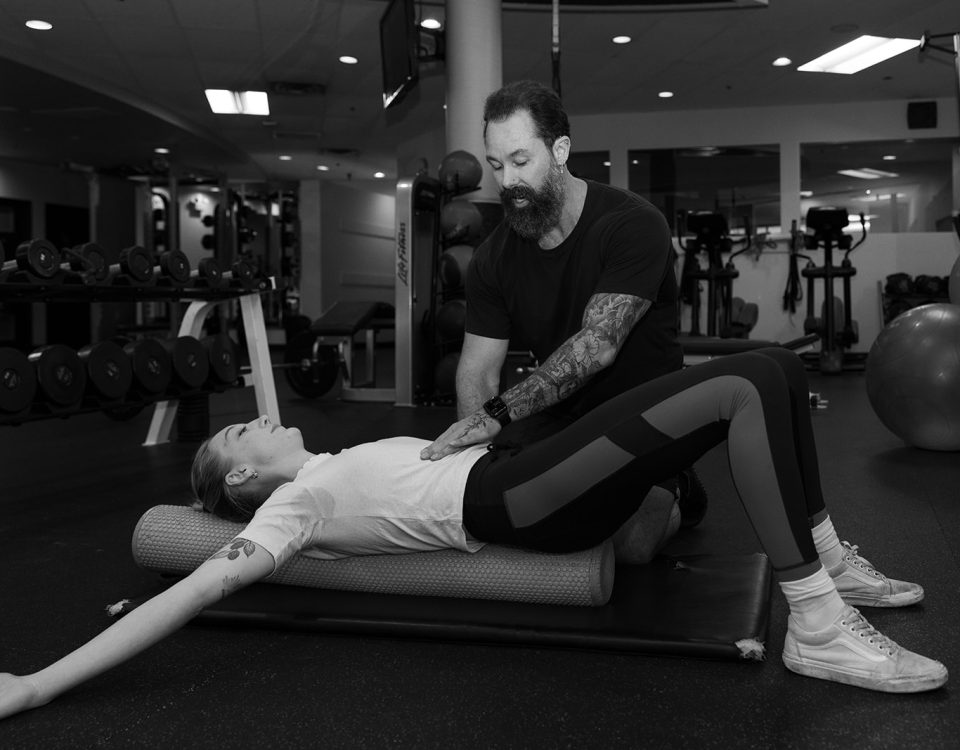
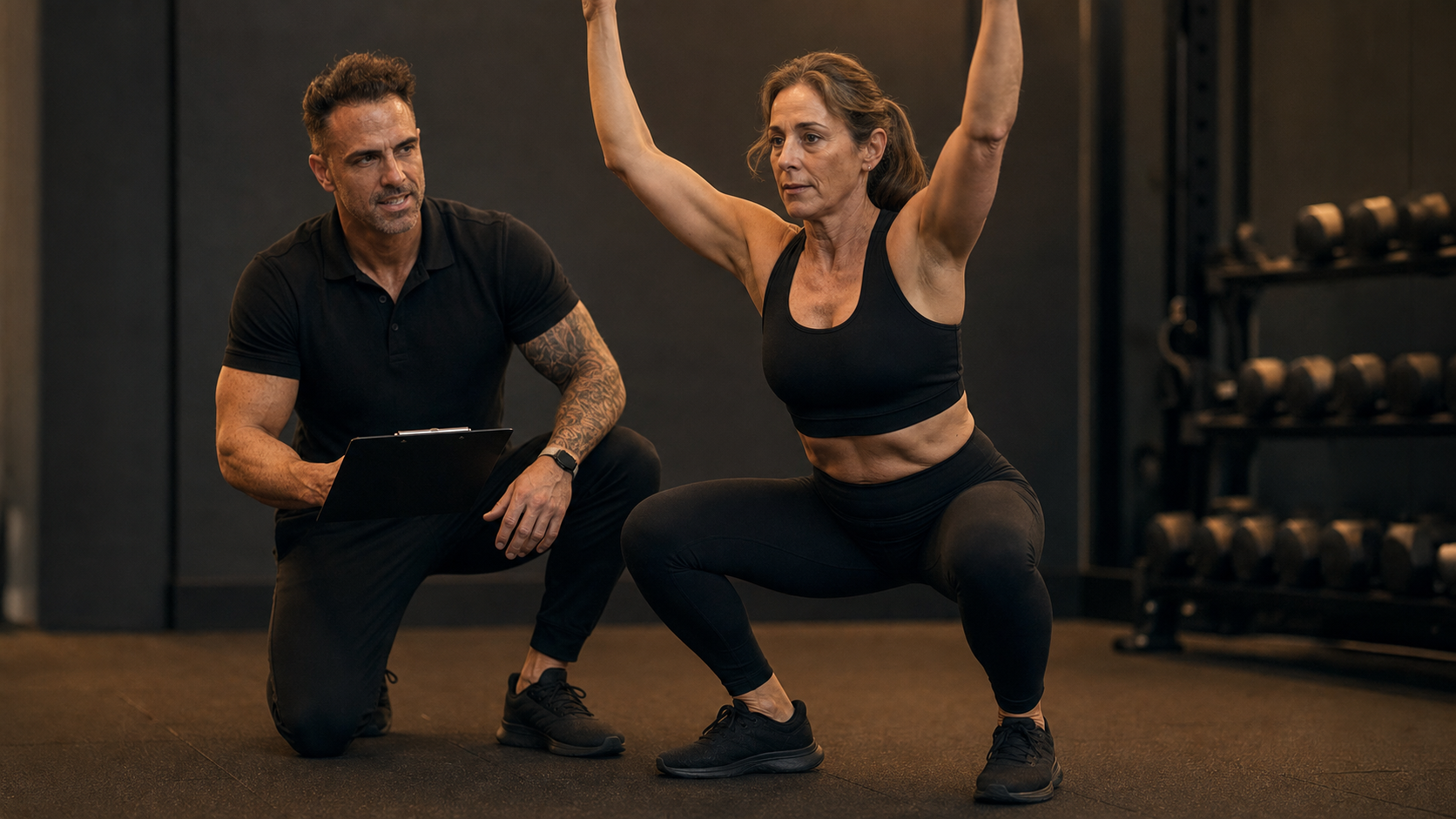
A proper assessment goes beyond a scale and a tape measure. It should include a movement screen (squat, hinge, push, pull, single-leg balance), a posture check, a conversation about pain history and daily habits, and specific goals with a timeline. This is also where a trainer should ask about your job — hours sitting, screen height, commute — because that shapes which muscles are tight, which are weak, and where your program needs to start.
At TurnFit, this happens across two short calls before you ever commit to a program: a 5-minute fit call to confirm goals and fit, then a 30-minute Zoom game-plan call where we walk through your movement history and build the first draft of your plan. You can book both directly from the assessment page.
What Questions Should You Ask Before Hiring a Trainer?
A short list of direct questions will expose more about a trainer’s quality than any testimonial page. Bring these to your first conversation.
- What certification do you hold, and is it current?
- How do you assess new clients before building a program?
- Have you worked with someone with my specific issue (old injury, desk job, postpartum, etc.)?
- How do you adjust programming when something isn’t working?
- What does a typical client relationship look like after 6 months? After 2 years?
- Can I see how you track progress over time?
How Much Does a Personal Trainer Cost in Vancouver?
Vancouver personal training pricing varies by format, location, and trainer experience. Below are TurnFit’s current 2026 rates for Kitsilano clients. Group and online formats cost less per session because the trainer’s time is shared or asynchronous.
| Format | TurnFit 2026 Price Range (per session) |
|---|---|
| 1-on-1 in-person (studio or gym floor) | $180–$350 |
| Small group (2–4 people) | ~$150 per person |
| Online coaching (programmed + check-ins) | $350–$600 per month |
| Corporate wellness / group workplace sessions | Custom, typically billed per program |
Prices at the low end usually mean a busier trainer with less individual attention; prices at the high end should come with a real assessment, ongoing adjustments, and accountability between sessions — not just the workout itself. See current TurnFit pricing for a transparent breakdown.
Should You Choose a Kitsilano Studio or a Big-Box Gym Floor?
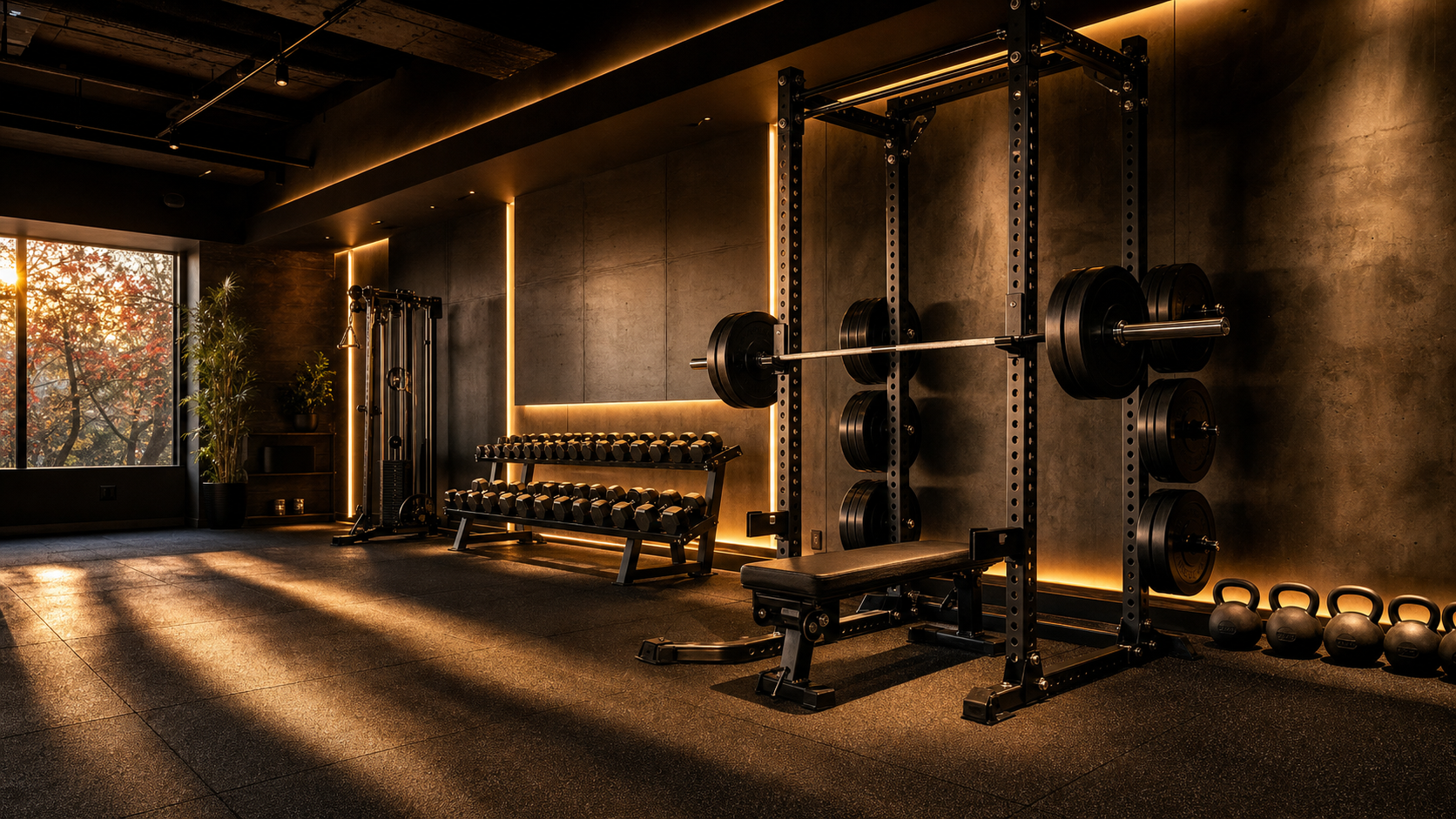
The right setting depends on what distracts you and what you need from the environment. A private or semi-private studio in Kitsilano typically means less noise, no waiting for equipment, and a coach who isn’t splitting attention across the whole gym floor. A big-box gym floor can be more convenient location-wise but usually means less individualized coaching per session.
- Studio setting: quieter, more privacy, consistent equipment, better for people newer to training or managing pain
- Gym floor training: can work well if you already know your way around a gym and mainly want programming and accountability
- Parking & commute in Kitsilano: street parking is limited near West 4th Ave and Broadway in peak hours — ask whether the studio has dedicated parking or is walkable/transit-accessible from your work or home
Why Does “Prevention Over Reaction” Matter When Choosing a Trainer?
Canada’s healthcare system is built to treat problems after they appear, not to prevent them — most people wait weeks or months for a physiotherapy referral once pain has already set in. A trainer who screens posture and movement patterns before pain shows up is doing the job public healthcare structurally can’t: catching small issues while they’re still cheap and easy to fix.
Why wait until there’s a big problem? Physical inactivity is already a measurable public health burden in Canada. One widely cited Canadian study estimated that physical inactivity accounted for roughly $2.1 billion, or 2.5% of total direct health care costs in Canada, in a single year, along with an estimated 21,000 premature deaths annually attributable to sedentary living (Katzmarzyk et al., CMAJ, via PMC). More recent national data shows the problem hasn’t gone away: only 46% of Canadian adults met recommended physical activity levels in 2022–2024, and adults averaged 9.3 hours of sedentary time per day (Statistics Canada, Canadian Health Measures Survey). A trainer working from a prevention mindset is directly addressing the same risk factors these numbers describe — before they turn into a doctor’s visit.
Does Working With a Trainer Actually Produce Better Results Than Training Alone?
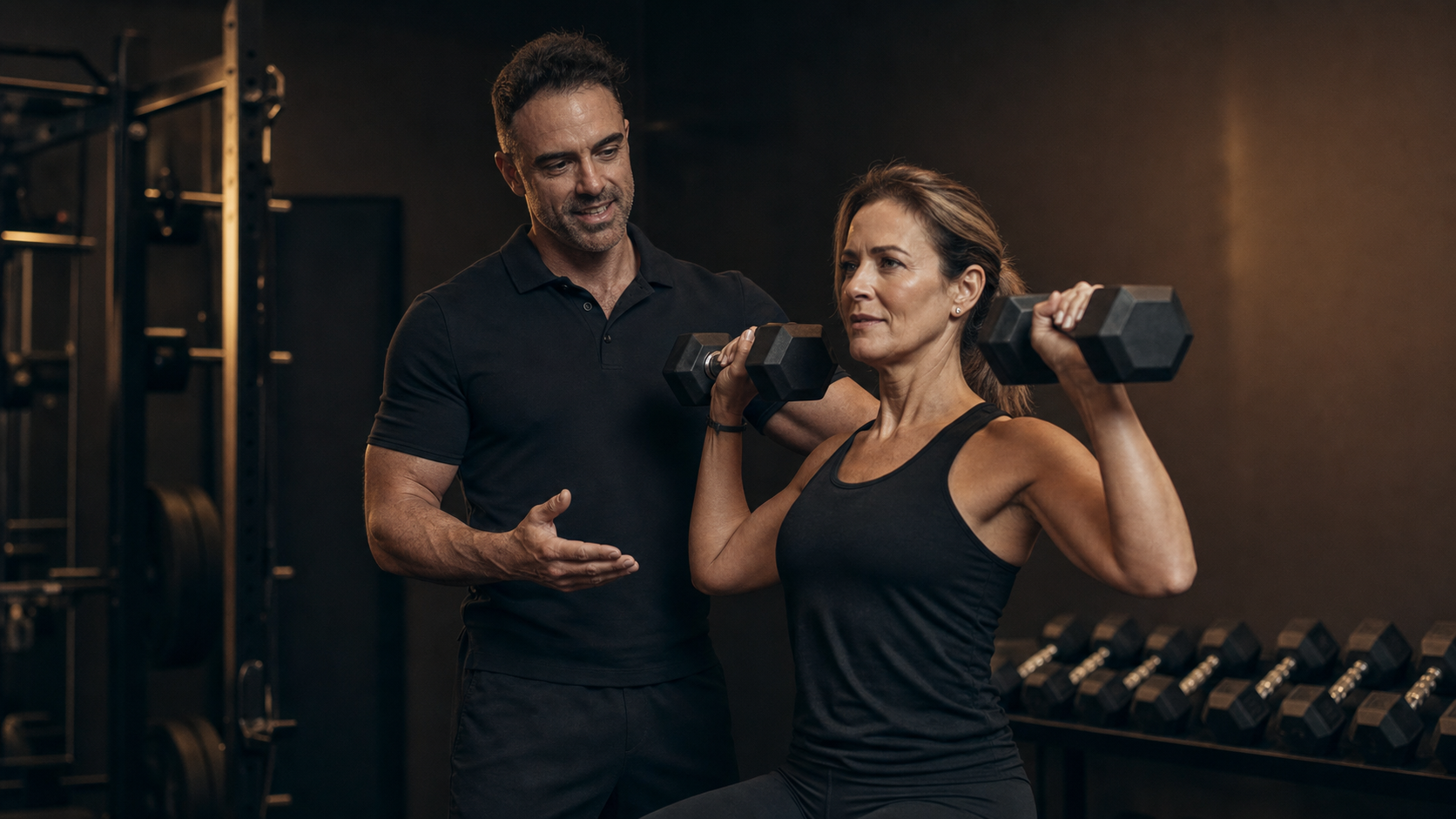
Yes, on several measurable outcomes — though the size of the advantage depends on how consistently you show up either way. A 2024 systematic review and meta-analysis of 34 randomized controlled trials (2,830 participants) compared supervised versus unsupervised exercise and found supervised training produced significantly greater improvements in knee extension strength, sit-to-stand performance, gait speed, and lean mass, with both formats showing similarly good safety and attendance (Gómez-Redondo et al., Sports Medicine, via PMC). Supervision doesn’t just add motivation — it adds real-time correction of technique and load, which unsupervised training structurally can’t replicate.
Key Takeaways
- Look for a recognized certification: CSEP-CPT, NSCA-CPT/CSCS, or ACE-CPT.
- A real trainer assesses your movement and posture before selling you a package.
- Red flags include no assessment, generic programming, high-pressure contracts, and inability to explain “why.”
- Vancouver 1-on-1 in-person personal training typically runs $180–$350 per session.
- Studio settings in Kitsilano generally offer more individual attention than gym-floor training.
- Supervised training produces measurably better strength and function outcomes than training alone (PMC).
- Physical inactivity costs Canada’s health care system billions annually — prevention-focused coaching addresses this directly (PMC).
How Does TurnFit Approach Personal Training in Kitsilano?
TurnFit trains clients in-person in Kitsilano and Downtown Vancouver, plus online, and has coached over 1,800 people with a 4.9-star Google rating across 240+ reviews and a Top Choice Award for 8 consecutive years. We build every program around four pillars — Mindset, Nutrition, Movement, and Recovery — and we start with a posture-first assessment because most of the pain and plateaus we see trace back to movement patterns nobody ever screened. It’s part of why roughly 80% of our clients stay with us 26+ months or longer: the plan keeps adjusting as you change.
If you’re comparing personal training options in Kitsilano, the fastest way to see if we’re a fit is a free 5-minute call, followed by a 30-minute game-plan session — no pressure, no contract on the spot. You can also explore online coaching, corporate wellness programs, or read more on the TurnFit blog, including our related guides on knee pain and weak glutes and strength training and mental health.
Frequently Asked Questions
How do I find a good personal trainer in Kitsilano?
Look for a nationally recognized certification (CSEP-CPT, NSCA, or ACE), ask whether they run a real movement assessment before selling a package, and request a trial call before committing to a long-term contract.
What certifications should a Vancouver personal trainer have?
CSEP-CPT is Canada’s most rigorous standard, followed by NSCA-CPT/CSCS and ACE-CPT. A kinesiology degree is a bonus but not a substitute for an active certification.
How much does personal training cost in Kitsilano and Vancouver?
Expect roughly $180–$350 per session for 1-on-1 in-person training, ~$150 per person for small group sessions, and $350–$600 per month for online coaching.
Is a personal training studio better than a big-box gym?
Studios typically offer more privacy, less waiting for equipment, and closer individual attention — helpful if you’re newer to training or managing pain. Gym-floor training can work well for experienced lifters who mainly want programming and accountability.
What should happen during a first personal training assessment?
A proper assessment includes a movement screen, posture check, discussion of pain history and daily habits (like desk work), and clear goals with a timeline — before any program or package is sold.
Is it worth hiring a personal trainer instead of training alone?
Research shows supervised training produces measurably better outcomes than unsupervised training on strength, gait speed, and functional measures, largely due to real-time technique correction and accountability (PMC meta-analysis).
How do I book an assessment with TurnFit in Kitsilano?
You can book a free 5-minute fit call directly through the TurnFit assessment page, which leads to a 30-minute Zoom game-plan call before any commitment.
Ready to Start Your Fitness Journey?
At TurnFit, we offer in-person personal training at our Kitsilano and Downtown Vancouver locations, online coaching programs with live Zoom calls, and online personal training across Canada. Check out our transparent pricing — no contracts, no hidden fees.
Book a Free 5-Minute Call →