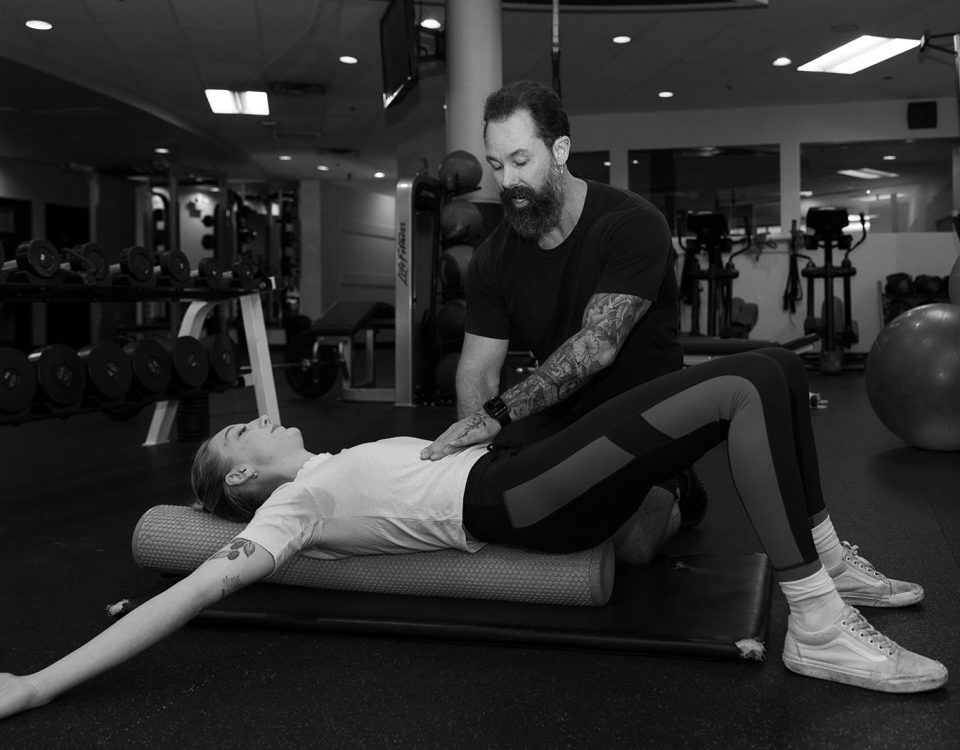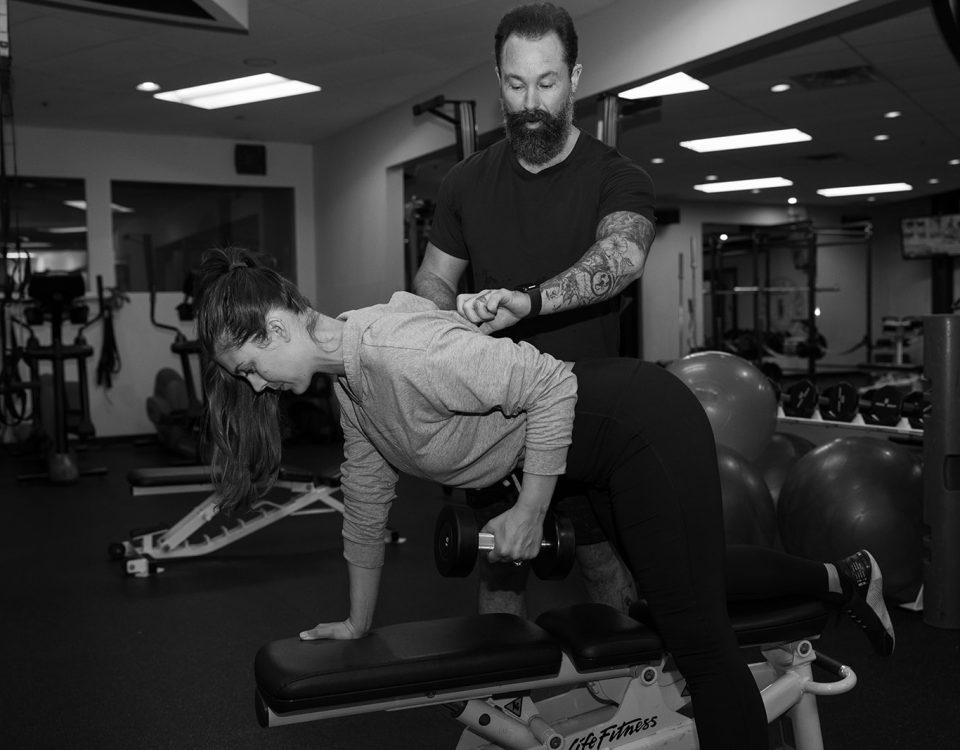
Somewhere between the squat rack and the selectorized stack, people pick teams.
One side says free weights are the only “real” training. The other says machines are safer, simpler, or somehow less serious. Neither slogan helps you choose a setup you will actually use next Tuesday after work.
A better question: what are you trying to get better at — and which tool lets you practise that well?
You do not need a personality built around barbells or a loyalty oath to the cable stack. You need a clear goal, a movement you can load with good form and honest range of motion, and a week you can repeat.
What the 2023 comparison reported
A systematic review and meta-analysis compared free-weight versus machine-based strength training of at least six weeks in adults aged 18–60 (Haugen et al., BMC Sports Science, Medicine and Rehabilitation, 2023; PubMed PMID 37582807; open-access full text).
Thirteen studies met the inclusion criteria. The abstract describes a large, male-majority adult sample. Outcomes covered maximal strength, jump performance, and muscle hypertrophy where those were reported.
What that synthesis supports, carefully:
- Strength changes tend to be specific. Free-weight tests improved more with free-weight training; machine-based tests tended to favour machine training.
- In direct comparisons of free-weight versus machine training, the synthesis detected no statistically clear overall difference for dynamic strength, isometric strength, countermovement jump, or hypertrophy.
- Practical takeaway: the choice can come down to individual preferences and goals, not a universal winner.
Absence of a statistically clear average difference is not proof that the two tools are the same for every person or every program. Preference and adherence still matter. The evidence base is male-majority. This is not an injury ranking, posture cure, medical claim, or appearance guarantee — and it does not prove machines “fix” every goal, or that free weights are obsolete.
Related myth-busting already on the site includes light weights vs heavy weights — a different question from machines versus free weights.
How to use that without joining a camp
If you want to get stronger on a free-weight pattern (for example a dumbbell press or a squat variation you care about), practise that pattern. Specificity is not snobbery. It is matching the skill and the test to the training.
If a machine lets you load a movement cleanly when free weights feel chaotic, unfamiliar, or simply unavailable, that can still be productive strength work. “Machine” is not a synonym for “fake.”
Mixing is allowed — and common. A solid week might use a free-weight or cable pattern you are learning, then a machine that lets you finish hard sets with a clear range of motion when the gym is busy or you are travelling.
Form, range, and posture still lead. The tool does not replace mastering the movement. Canadian guidelines ask adults for major-muscle strengthening at least twice a week (CSEP 18–64). They do not require a barbell-only identity.
Choose a tool you will use well, then refine for specificity. Online coaching can build around home dumbbells one month and a full studio the next without rewriting your identity.
Common traps this post is trying to retire
- “Machines don’t count.” The comparison evidence does not support a blanket dismissal.
- “Free weights are always better for muscle.” This synthesis did not detect a statistically clear overall hypertrophy advantage for either modality.
- “Pick one forever.” Goals, equipment access, travel, and coaching feedback can change the mix.
- Turning equipment into a personality test. Coaching is about a plan you can repeat — not proving you belong on the platform.
- Assuming the photo you saw online is the only valid setup. Your week, your training history, and the coaching feedback you get matter more than a stranger’s rack photo.
A simple decision frame for your next session
- Write the goal for the session in one line (example: “get stronger on a hip-dominant squat pattern,” not “do everything”).
- Pick one primary tool that lets you practise that pattern with control.
- Add a second tool only if it helps you complete quality work — not to impress the room.
- Note what felt clear and what still felt fuzzy. That note is useful coaching material.
None of that requires declaring a winner between machines and free weights.
Where TurnFit fits
Online coaching can build a week around what you have — home dumbbells, a hotel gym stack, or a full studio — and still coach form, range of motion, and posture on the moves that matter. Corporate programs are a separate conversation for teams. In-person sessions in Kitsilano or Downtown Vancouver help when you want live cues.
Related reading: why resistance training matters and our online personal training overview.
Want help choosing a starting setup that matches your goal — without the gear shame?
References
- Haugen ME, et al. Effect of free-weight vs. machine-based strength training on maximal strength, hypertrophy and jump performance — a systematic review and meta-analysis. BMC Sports Science, Medicine & Rehabilitation. 2023;15:103. PubMed PMID 37582807. Full text.
- Canadian Society for Exercise Physiology. Canadian 24-Hour Movement Guidelines — Adults 18–64. csepguidelines.ca.
Ready to Start Your Fitness Journey?
At TurnFit, we offer in-person personal training at our Kitsilano and Downtown Vancouver locations, online coaching programs with live Zoom calls, and online personal training across Canada. Check out our transparent pricing — month to month, one month’s notice, no hidden fees.
Book a Free 5-Minute Call →