If your workouts have started to feel harder even though nothing about your training has changed, stress is likely the missing variable. Same weights, same reps, same routine — but everything feels heavier and recovery takes longer. This is especially true for women 40+, where cortisol and estrogen interact in ways that directly affect your recovery and performance.
I see this constantly with clients here in Vancouver and in my online coaching across Canada. You’re not imagining it, and you’re not losing fitness. Your nervous system is carrying a heavier load than your training log shows.
This matters because most training advice assumes stress is a constant. It isn’t. A demanding job, disrupted sleep, caregiving responsibilities, or the hormonal shifts of perimenopause all change how your body responds to the exact same workout from one week to the next. Understanding that connection is the first step to training in a way that actually works with your life.
The Cortisol-Workout Connection (What’s Actually Happening)
Cortisol is your primary stress hormone. In small, well-timed doses, it’s essential — it helps you wake up, respond to a hard set, and push through a tough interval. The problem isn’t cortisol itself. It’s chronic, elevated cortisol that never gets a chance to come back down.
When cortisol stays high day after day, a few things happen inside your body:
- Muscle protein synthesis is impaired, meaning the repair and rebuilding process after training slows down
- Your perceived effort goes up — the same weight genuinely feels heavier
- Recovery between sessions takes longer, even with good sleep and nutrition
Women in perimenopause are more sensitive to cortisol spikes because estrogen is fluctuating. Estrogen normally helps buffer the stress response, so when it dips, cortisol has a bigger, longer-lasting effect on your body.
This is a hormonal reality, not a personal failing. If a workout that used to feel manageable now leaves you flattened for two days, that’s your physiology shifting — and it’s exactly why the training adjustments below exist.
Training hard when you’re already stressed is like trying to build a house during an earthquake. You can pour all the effort you want into it, but the ground underneath keeps shifting, and the structure never quite holds.
Signs Your Stress Is Sabotaging Your Training
Before you can adjust anything, you need to recognize what stress-driven underperformance actually looks like. It’s rarely dramatic — it shows up in small, cumulative signals:
- Workouts feel noticeably harder than usual despite an identical load
- You’re not recovering between sessions — soreness lingers longer than it should
- Sleep is poor, fragmented, or you wake up not feeling rested
- Hunger and cravings are up, especially for sugar or salt
- Your mood and motivation dip specifically around training time
If two or more of these sound familiar right now, your body is telling you something important. It’s not a discipline problem. It’s a signal worth listening to.
I want to be clear about something: none of this means you should stop training. Movement is one of the best tools you have for regulating stress and supporting hormone balance. The goal isn’t less training — it’s smarter training that matches your current capacity instead of fighting against it.
The 3 Training Adjustments That Help
The good news: you don’t need to stop training. You need to train differently while your stress load is high. Here are the three adjustments I make with clients most often.
1. Reduce volume, keep intensity. Do fewer sets at the same weight. You maintain the strength stimulus your muscles need without piling more total stress onto an already taxed system.
2. Replace HIIT with Zone 2 work. Swap high-intensity intervals for a brisk walk or light cycle. This builds your aerobic base and supports fat metabolism without triggering another cortisol spike on top of the one you’re already managing.
3. Add a 2–3 minute post-training downshift. Before you rush back into your day, spend a few minutes on slow breathing — four counts in, six counts out. This simple practice activates your parasympathetic nervous system and helps your body transition out of “fight or flight” mode. If tight hips and shoulders are part of your stress pattern too, this pairs well with the mobility work I cover in posture and mobility training.
What to Eat to Support Cortisol-Aware Training
Nutrition timing matters more when stress is elevated. A few adjustments make a real difference:
- Don’t train fasted when you’re stressed. Have a quick carb-plus-protein snack beforehand, like a banana with Greek yogurt
- Get 30–40g of protein within 60 minutes after your workout to support muscle repair
- Prioritize magnesium-rich foods — leafy greens, pumpkin seeds — which support both sleep quality and healthy cortisol regulation
None of this requires a complicated plan. It requires consistency around the moments that matter most: right before and right after you train.
Hydration matters here too. Dehydration itself raises cortisol, so a glass of water before you train is a small habit with an outsized effect. Pair that with steady meal timing throughout the day, and you remove two common, avoidable stress triggers before you even step into a workout.
When to Push and When to Pull Back — a Simple Framework
I use a straightforward traffic-light system with my clients to decide how hard to train on any given day:
- Green light (push): You slept 7+ hours, your stress feels manageable, and your energy is normal. Train at full intensity.
- Yellow light (modify): Sleep was poor or stress is moderate. Cut your volume by about 20% and skip HIIT for the day.
- Red light (recover): Stress is high, sleep was terrible, and you feel exhausted. Take a walk, prioritize sleep, and let training wait.
This isn’t about doing less overall. It’s about matching your effort to your actual capacity so you keep making progress instead of digging a deeper hole.
Most women I work with are surprised by how much progress they make once they stop treating every session as an all-or-nothing test. A well-placed yellow or red light week is often what makes the next green light week actually productive. Consistency over months beats intensity in any single session.
How a Trainer Helps You Navigate This
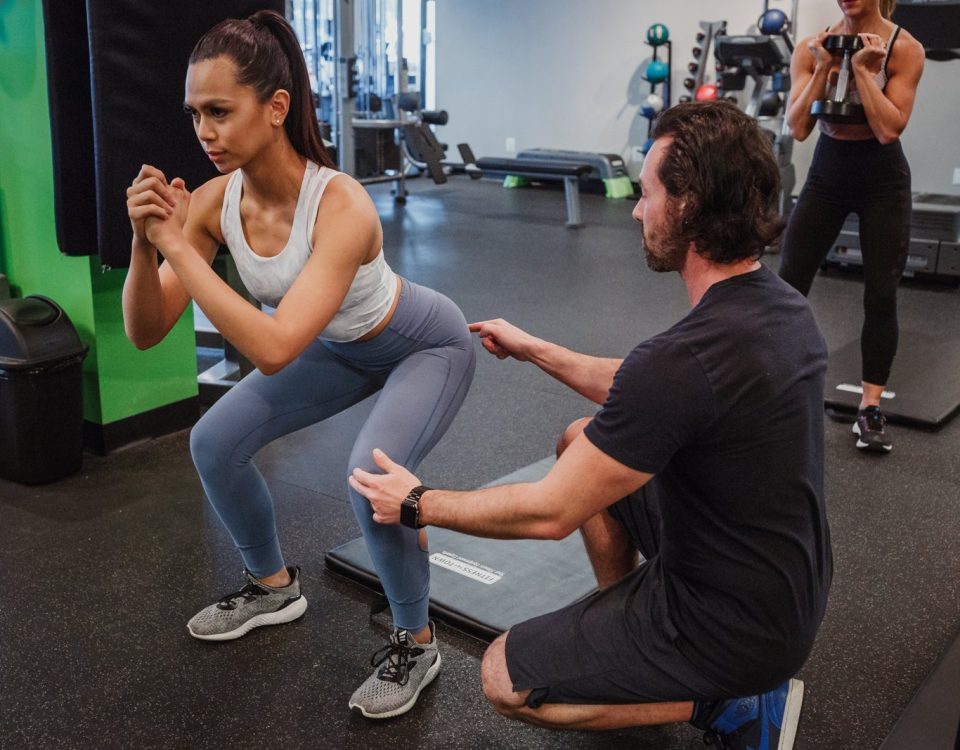
This is exactly where working with a trainer changes the trajectory. Instead of a rigid plan that ignores what’s happening in your life, you get a personalized plan that adjusts to your stress load week by week — more volume when you’re recovered, less when you’re not, and a clear reason behind every change.
It also means you’re not left guessing on the hard weeks. Instead of wondering whether to push through or back off, you have someone tracking your sleep, your energy, and your training load together, and adjusting your program before burnout or injury forces the issue. That’s the difference between training that compounds over years and training that stalls out every few months.
If you’re in Vancouver and want to build a plan tailored to your body and your life right now, start with my free assessment. We’ll look at your training, sleep, and stress together and build from there.
Not local? I also offer online coaching for women across Canada, with the same individualized, stress-aware approach delivered wherever you are.
You don’t need to train harder. You need to train smarter, in a way that actually accounts for what your body is carrying. That’s how you keep making progress at 40+ — not by pushing through everything, but by knowing when to push and when to pull back.
Ready to build a plan that works with your body instead of against it? Book your free assessment and let’s figure out what your training should actually look like right now.
Ready to Start Your Fitness Journey?
At TurnFit, we offer in-person personal training at our Kitsilano and Downtown Vancouver locations, online coaching programs with live Zoom calls, and online personal training across Canada. Check out our transparent pricing — no contracts, no hidden fees.
Book a Free 5-Minute Call →