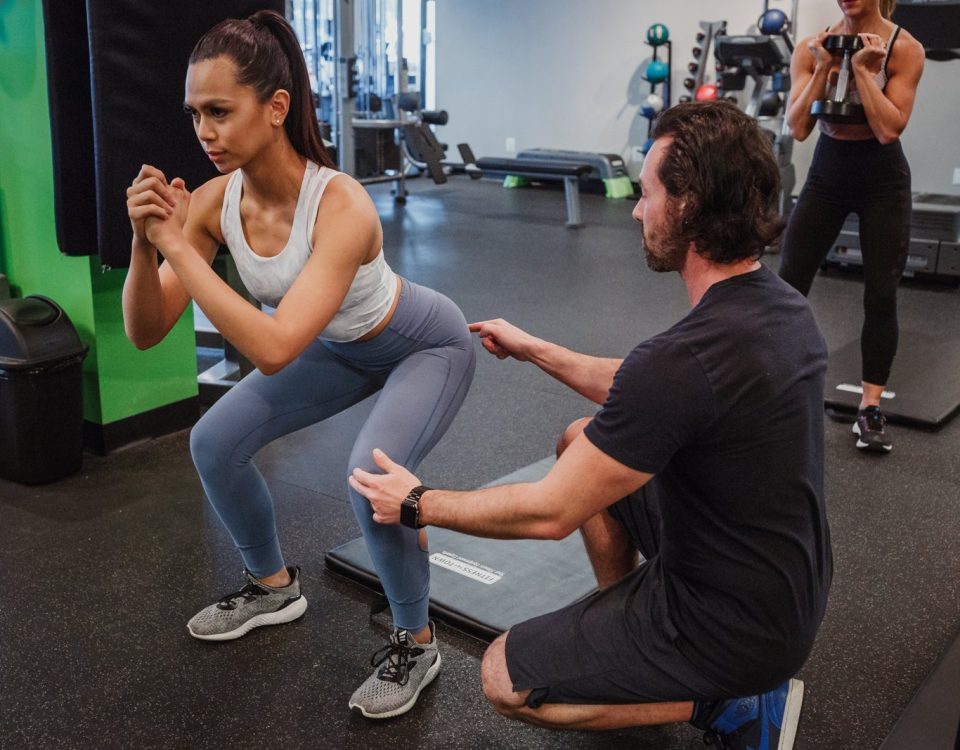
At TurnFit, 90% of our clients are women. And in over a decade of coaching, one pattern shows up again and again: the same desk-job, daily-stress, tight-hip-flexor body that shows up for squats is the same body that can’t fire its glutes, can’t stabilize its spine, and can’t escape the cycle of trying harder without getting different results.
This blog explains the science behind why that happens — and exactly how TurnFit’s custom online personal training solves it differently from every generic programme on the market.
We’re going to cover posture, glutes, core, mental health, and the full kinetic chain from your feet to the top of your head. Everything is backed by peer-reviewed research. Everything is connected. And by the end, you’ll understand why so many of our clients report visible glute growth and dramatically better posture within a single month — without a single heavy weight.
The Real Problem: Why Your Body Isn’t Responding

You’re doing the squats. You’re doing the hip thrusts. You’re going to the gym, or following the app, or watching the YouTube video. And yet: your glutes don’t feel it the way they’re supposed to, your lower back is always tight, and the results don’t match the effort.
Here’s what’s actually happening.
Modern life builds a very specific body. Hours of sitting — at a desk, in a car, on a couch — train your nervous system into a fixed pattern: hip flexors chronically shortened, glutes chronically switched off, upper back collapsed, head pushed forward. The WHO’s Global Status Report on Physical Activity 2022 found 27.5% of adults are insufficiently physically active, but even those who do exercise carry sedentary postural patterns into every workout.
The result is what trainers call “the desk worker body” — and it doesn’t respond to generic training the same way a well-aligned body does, because the fundamental neuromuscular wiring is different.
The good news: this is entirely fixable. The better news: fixing it produces results that feel almost miraculous — because you’re not just getting stronger, you’re finally unlocking muscles that have been neurologically suppressed for years.
But it requires a custom programme built around your specific patterns. Not an app. Not a cookie-cutter plan. A trained human who assesses exactly what is happening in your body and addresses the root cause.
That is what TurnFit’s custom online personal training delivers.
The Posture Problem — Why It’s the Root Cause of Everything
What Poor Posture Actually Does to Your Body
Poor posture isn’t an aesthetic issue. It’s a neuromuscular systems failure that cascades through your entire body, affecting which muscles can activate, how much force they can produce, and whether your joints are loaded safely during movement.
The primary pattern in desk-working women is a combination of:
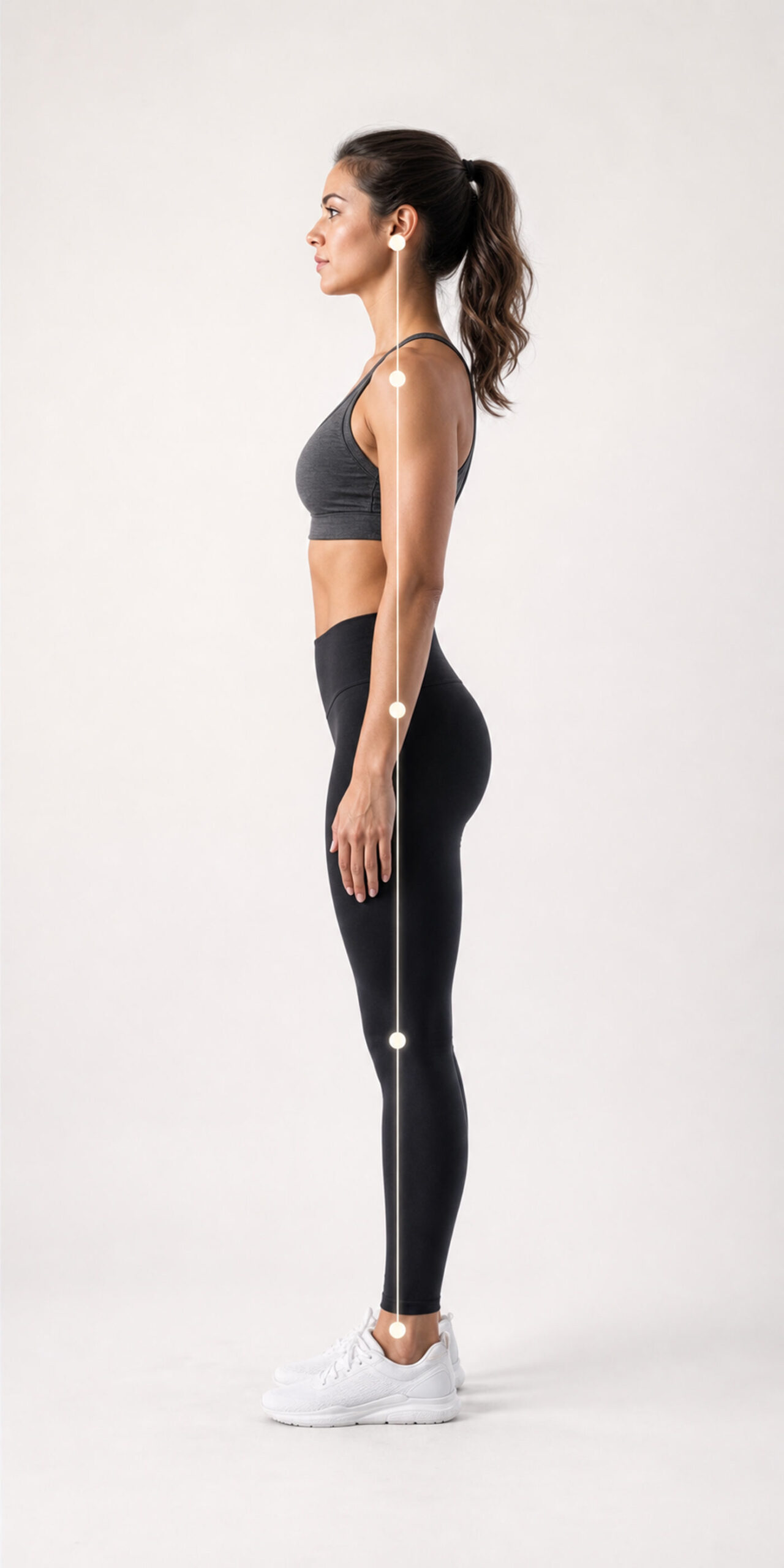
- Anterior pelvic tilt (APT) — the pelvis tilts forward, creating lumbar hyperextension and compressing the lower spine
- Forward head posture (FHP) — the head migrates forward of the shoulders, overloading the neck extensors and destabilizing the shoulder complex
- Rounded thoracic spine (kyphosis) — the upper back collapses, protruding the shoulder blades and reducing overhead mobility
Each component feeds the others. And collectively, they create a body that cannot effectively recruit the glutes, cannot stabilize the spine with the deep core, and cannot generate force through the posterior chain.
The Neuromuscular Chain: How Posture Controls Which Muscles Fire
This is the mechanism most people — and most trainers — don’t understand.
Your nervous system fires muscles in predictable sequences determined by your posture. A landmark study by Farooq et al. (2014, BMC Sports Science Medicine) demonstrated that changes in trunk and pelvic posture directly alter hip and thigh muscle activation — with anterior trunk sway increasing posterior chain activity while deactivating anterior muscles, and pelvic position changing hip abductor activation entirely.
In plain language: how you stand and sit determines which muscles can and cannot fire when you exercise.
Ludwig et al. (2024, Journal of Functional Morphology & Kinesiology) used electromyography in 41 participants and found the gluteus maximus is the most critical muscle for every single motor strategy of pelvic correction — it has the strongest correlation with pelvic tilt change. This means: the glutes and posture correction are not separate goals. They are the same goal.
Anterior Pelvic Tilt: The Glute Killer
Anterior pelvic tilt reciprocally inhibits the gluteus maximus. This is the central mechanism connecting posture to why your glutes won’t grow.
When the hip flexors are chronically shortened (as they are in anyone who sits for hours daily), the nervous system automatically inhibits their antagonist — the gluteus maximus. Kim & Kim (2015) demonstrated via EMG that subjects with hyperlordotic lumbar angles show significantly reduced gluteus maximus activity during prone hip extension — with the erector spinae and hamstrings compensating instead. You’re literally training the wrong muscles.
And it gets worse: Pereira et al. (2021) showed that pelvic anteversion (APT) reduces lower gluteus maximus activation while correcting to posterior pelvic tilt significantly increases it. The position of your pelvis is a switch — and for most desk-working women, that switch is in the “off” position during every exercise they do.
How Quickly Can Posture Improve?
Faster than you think — with the right programme:
| Postural Issue | Timeline with Targeted Training | Research Source |
|---|---|---|
| Anterior pelvic tilt | 6–8 weeks | Kaushika et al., 2024 (p<0.0001) |
| Forward head posture | 6–10 weeks | Ali et al., 2025 |
| Musculoskeletal pain | 4–8 weeks | Lee & Lee, 2015 |
| Lower cross syndrome | 6–8 weeks | Ranjani Shree et al., 2025 |
| Stable new posture pattern | 3–6 months | Consistent training required |
The initial neuromuscular changes — reduced pain, better muscle activation, feeling taller — appear within weeks. This is why TurnFit clients notice a difference in how they feel within the first month, before dramatic physical changes have even begun.
“Within a month, clients who focus on posture correction — even without hardcore resistance training — consistently report that their glutes grew and were perkier. This isn’t marketing language. It’s the direct result of unlocking muscles that were neurologically inhibited.”
— David Turnbull, BCRPA Certified, TurnFit Personal Trainers
Want to know what your posture pattern is? Book your free movement assessment with TurnFit here.
Why Your Glutes Won’t Activate — And What Actually Fixes It
Glute Amnesia: Why It Happens and Why It’s So Common
“Gluteal amnesia” is the clinical term for inhibited glutes — and it’s epidemic among women who sit for work. Prolonged hip flexion keeps the hip flexors in a chronically shortened, activated state, while the gluteus maximus sits in a lengthened, chronically inhibited position. Hours of daily sitting train this inhibition pattern so deeply that it persists during exercise, even when you’re consciously trying to use your glutes.
The evidence for this is direct. Amabile, Bolte & Richter (2017, PLOS ONE) measured gluteus maximus cross-sectional area via CT scan in women aged 40–69 and found women with chronic low back pain had significantly smaller gluteus maximus than controls — right GM: 45.12 cm² vs. 51.89 cm² (p=0.016). The number of back pain clinic visits correlated negatively with gluteus maximus size. Glute atrophy and back pain form a self-reinforcing loop.
And it’s not just a strength issue. Kissman et al. (2025, Frontiers in Physiology) confirmed that individuals with common knee pain show reduced central activation ratios in both the gluteus medius and gluteus maximus — confirming that glute inhibition is a neuromuscular deficit, not simply a matter of training harder.
Three Gluteal Muscles — Why Training All Three Matters
The glutes are not one muscle. They are three, each serving a distinct function that no single exercise addresses:
| Muscle | Primary Function | What Breaks Without It |
|---|---|---|
| Gluteus Maximus | Hip extension, posterior pelvic tilt, external rotation | All power movements; APT persists; lower back takes over |
| Gluteus Medius | Pelvic stabilization, hip abduction | Pelvic drop, knee valgus, IT band syndrome, hip pain |
| Gluteus Minimus | Hip abduction, internal rotation support | Lateral stability; often completely neglected |
Research by Semciw et al. (2020, International Journal of Sports Physical Therapy) reviewed evidence for therapeutic exercises targeting all three gluteus medius subdivisions and found that activation is not uniform — different exercises preferentially recruit different portions. This means a comprehensive glute programme requires strategic exercise selection, not just “more squats.”
What the Research Says About Building Glutes That Last
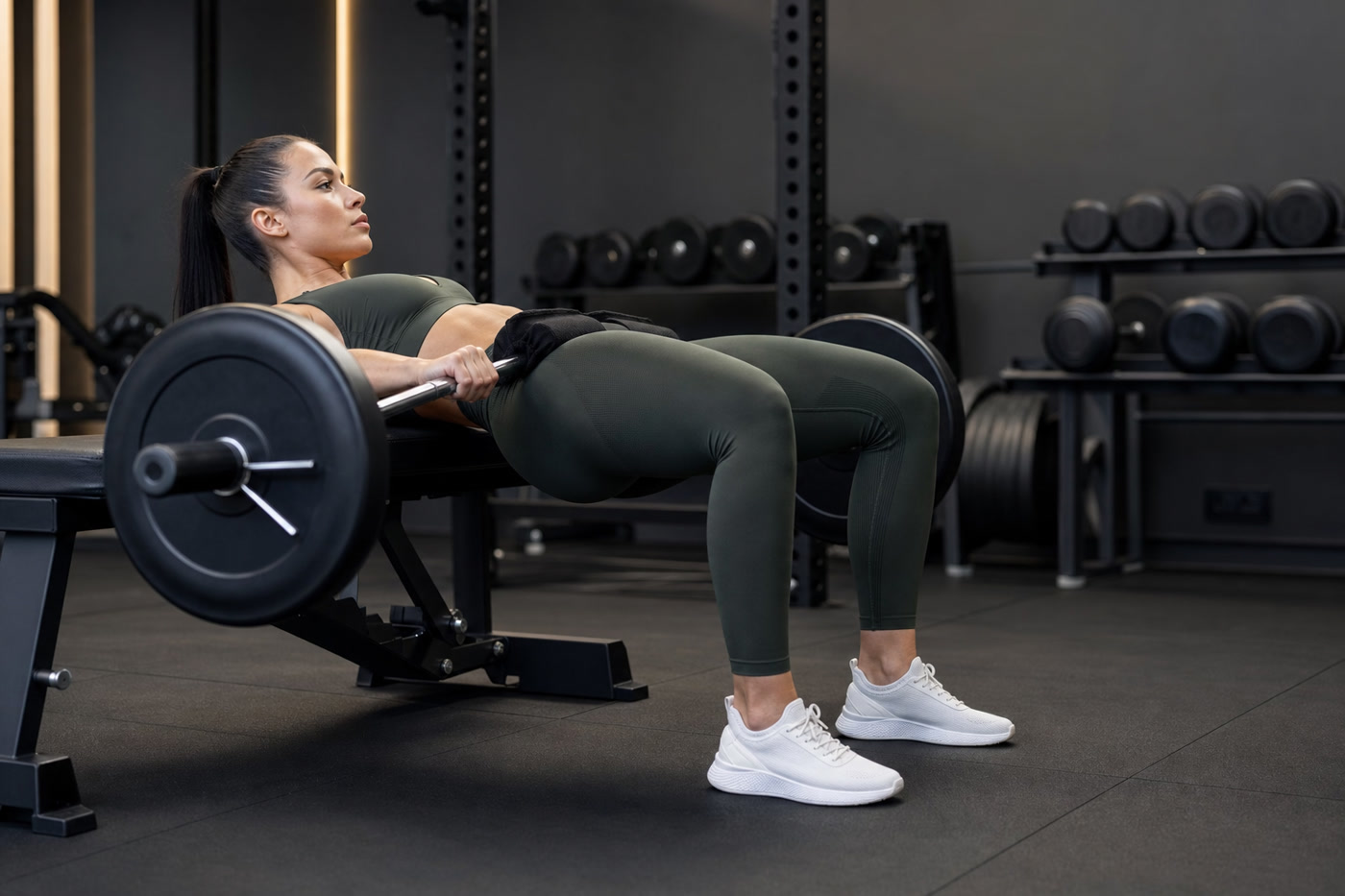
For gluteus maximus hypertrophy, a 2025 systematic review and meta-analysis by Krause Neto et al. (Frontiers in Physiology) of 12 studies confirmed resistance training produces a moderate effect on GM hypertrophy (SMD 0.71, p<0.00001) and that the barbell hip thrust should be prioritized for single-joint glute-specific development.
Kassiano et al. (2024) in untrained young women found that adding the barbell hip thrust to a leg training programme produced +9.3% gluteus maximus thickness vs. +6.0% without it over 10 weeks (p=0.016). The hip thrust is not optional — it is the difference between average and exceptional glute results.
For training volume, Barbalho et al. (2019, Medicine & Science in Sports & Exercise) found in 40 trained women that 5–10 sets per muscle group per week is optimal. Volumes above 15 sets per session showed diminishing returns, and 20 sets per session actually produced less hypertrophy than 5–10. More is not always better — smarter is.
Why Clients Report Glute Growth “Without Hardcore Lifting”
TurnFit clients consistently report this phenomenon within their first month. The explanation is pure neuroscience:
- Neural drive restoration: Correcting APT removes reciprocal inhibition. Suddenly every movement recruits more gluteal motor units than before.
- Improved length-tension relationship: The gluteus maximus works at its optimal length through hip extension when the pelvis is in neutral.
- Downstream daily loading: When the gluteus medius activates properly during gait, daily walking becomes a continuous, low-level glute stimulus — without a single formal set.
- Confirmed by research: Ludwig et al. (2024) confirmed that every pelvic correction strategy requires gluteus maximus activation — meaning postural work is inherently glute work.
This is also why loading before fixing posture doesn’t produce the same results. A squat or hip thrust performed with APT trains compensatory patterns — not the glutes themselves.
See our TurnFit Posture & Mobility service page for more on our posture-first approach.
The Truth About Core Strength (It’s Not About Crunches)
What Your Core Actually Is
Your core is not your abs. It is a 360° pressure-generating system that protects your spine, stabilizes your pelvis, and transfers force between your upper and lower body during every single movement you make.
The complete core includes:
- Deep stabilizers: Transversus abdominis (TrA), multifidus, pelvic floor muscles, diaphragm
- Intermediate layer: Internal oblique, external oblique
- Outer layer: Rectus abdominis (the “six-pack”), erector spinae, quadratus lumborum
- Hip complex: Gluteus maximus and medius, psoas (which attaches directly to the lumbar spine)
Lynders (2019, HSS Journal) defines the core as “trunk muscles that provide dynamic stability by absorbing the energy of loading the spine during activities” — explicitly including the pelvic floor and diaphragm. The transversus abdominis is identified as the most critical deep core muscle.
How Posture Shuts Off the Deep Core
The same anterior pelvic tilt that inhibits the glutes also disrupts the deep core. Shiina et al. (2016) demonstrated via EMG that transversus abdominis activity is greatest during posterior pelvic tilting — correcting APT directly recruits the deep core. In APT, the erector spinae overactivates to compensate, masking how underactivated the actual stabilizers are.
This is why crunches don’t fix back pain. They train the outer core (rectus abdominis), which is already likely compensating, while the TrA, multifidus, and pelvic floor remain dormant.
What Happens When the Deep Core Works Properly
In a healthy nervous system, the transversus abdominis fires 30–110 milliseconds before a limb moves — anticipatorily protecting the spine before any load arrives. In people with poor posture or lower back pain, this timing is delayed or absent.
Selkow et al. (2017) demonstrated in a randomized trial (n=42) that 4 weeks of core stability training significantly improved both TrA activation ratio and onset timing during upper extremity movements. The effect size for onset timing was d=-1.88 — one of the largest effect sizes seen in physiotherapy research.
Core Strength and Lower Back Pain — The Numbers
Lower back pain affects 80% of people at some point. For women — especially those who sit for work — core dysfunction is almost always part of the picture. The research on targeted core training is overwhelming:
- 62.3% reduction in pain and 63.6% reduction in disability from core stability training in women with chronic mechanical lower back pain — Ali et al. (2025, Journal of Biomedical Research)
- Core stability provides significant therapeutic effects including “reduced pain intensity, functional disability, and improved quality of life” across 49 studies — Frizziero et al. (2021, Journal of Functional Morphology & Kinesiology)
The Pelvic Floor Connection — Women-Specific
The pelvic floor is the base plate of the core pressure system. Every squat, deadlift, and plank that properly activates the deep core simultaneously trains the pelvic floor — something most women don’t know and most trainers never mention.
Nipa et al. (2022, Advances in Urology) in 50 women found that combining core stability exercise with pelvic floor muscle exercise produced 72% improvement vs. 28% for pelvic floor exercise alone (p≤0.001). The core and pelvic floor are the same system and must be trained together.
Furthermore, Lee (2018, Medical Science Monitor) showed that ankle dorsiflexion position directly activates the pelvic floor — a direct demonstration of the kinetic chain linking foot mechanics to the deepest layer of the core.
Mental Health and Physical Fitness — The Science Women Need to Hear
The Most Underprescribed Antidepressant in Existence
The evidence that resistance training reduces anxiety, depression, and stress in women is not tentative. It is not preliminary. It is among the most consistent findings in exercise science, supported by multiple high-quality meta-analyses with thousands of participants.
The landmark study: Gordon et al. (2018, JAMA Psychiatry) meta-analyzed 33 randomized controlled trials (n=1,877 participants) and found:
- Resistance exercise produces a moderate antidepressant effect (Hedges’ δ = 0.66, 95% CI: 0.48–0.83)
- Among participants with clinically elevated baseline depression: 45% mean reduction in depressive symptoms
- Number needed to treat: 4 — treat four people, one has significant clinical improvement
- Effect was significant regardless of age, sex, health status, programme duration, or training volume
A 2025 study by Cunha et al. (Psychiatry Research) in 120 older women found that 12 weeks of resistance training produced:
- 41.6% reduction in anxiety scores (BAI)
- 34.2% reduction in depression scores (PHQ-9)
- Significant improvements in cognitive function
And it’s not just mood. Oftedal et al. (2019, Preventive Medicine) in a cross-sectional analysis of 5,180 Australian women found that women doing both aerobic and resistance training had a 39% lower likelihood of depression (RRR=0.61) and a 53% lower likelihood of co-occurring depression and anxiety (RRR=0.47) compared to inactive women.
Strength Training vs. Cardio for Mental Health
For years, the standard advice was “do cardio for mental health.” The research now tells a more nuanced story. Cunha et al. (2025) found resistance training alone produced anxiety reductions of 41.5–41.6% — comparable to or exceeding the typical effects of antidepressant medication in mild-to-moderate presentations.
Strickland & Smith (2014, Frontiers in Psychology) found that low-to-moderate intensity resistance training (below 70% of 1-rep max) produces the most reliable and robust reductions in anxiety — which is exactly the intensity range of a structured beginner or intermediate women’s programme.
The Posture-Confidence Connection
There is also a direct neurological link between posture and how you feel. Embodied cognition research consistently shows that body position affects psychological state — teaching clients to stand tall, with an open chest and neutral pelvis, is not just biomechanics. It is a genuine psychological intervention.
This is why TurnFit integrates posture correction, strength training, and mental health outcomes as a unified goal rather than separate programmes. The woman who leaves a session standing taller isn’t just physically different — she’s neurologically different.
Cortisol Reduction: Why Your Training Should Lower Stress, Not Raise It
One important nuance: acute high-intensity exercise temporarily raises cortisol. But Bogdanis et al. (2022, Reviews in Endocrine & Metabolic Disorders) found that regular moderate-intensity resistance training normalizes the cortisol response over time — reducing chronic cortisol, the stress hormone associated with abdominal fat storage and mood dysregulation.
This is why the intensity and structure of your programme matters. The goal isn’t to exhaust you — it’s to systematically improve your stress-adaptation system alongside your physical strength.
Your Foundation: Foot Health and the Full Kinetic Chain
This is the section that most online trainers skip entirely — and it’s one of the main reasons TurnFit delivers results that others can’t.
Why Your Feet Affect Your Glutes, Hips, and Spine
The kinetic chain is the interconnected system of joints and muscles from your feet to your skull. Every joint above depends on what happens below. Foot mechanics — how your foot contacts the ground, how it pronates or supinates, how your ankle moves — drive loading patterns all the way up to your spine.
The evidence is direct and striking:
Braga et al. (2019, Gait & Posture) studied runners with excessive foot pronation and found that correcting foot pronation with medially wedged insoles reduced:
- Ankle eversion (p=0.003)
- Knee transverse plane motion (p=0.012)
- Hip transverse plane motion (p=0.031)
- Hip adduction (p=0.024)
One foot correction produced measurable improvements across three joints above it.
And remarkably, it works in reverse too. Turgut et al. (2021, Journal of Sport Rehabilitation) found that a single session of hip-focused neuromuscular exercise significantly reduced foot pronation (p=0.003) — proving the chain works bidirectionally. Strengthen the hips, improve the feet.
Ankle Mobility and ACL Risk
Limited ankle dorsiflexion is one of the most underassessed movement restrictions in women. Dhahbi et al. (2025) reviewed the joint-by-joint approach and found that limited ankle dorsiflexion is directly associated with increased knee valgus during movement — which significantly increases ACL injury risk. Women already have 2–8x higher ACL injury rates than men. Ankle mobility is not a footnote; it’s an injury prevention priority.
TurnFit and the Full Kinetic Chain Assessment
TurnFit is one of the only custom online training providers that includes foot mechanics and ankle mobility in every movement assessment. We evaluate:
- Foot pronation / supination pattern
- Ankle dorsiflexion range
- Knee alignment under load
- Hip mobility and pelvic position
- Lumbar curve and thoracic mobility
- Shoulder blade position and overhead mobility
- Head and neck position
Each finding informs a specific element of your custom programme. No generic programme does this. Most online trainers don’t know to ask. Learn more about our posture and mobility approach here.
Custom vs. Generic: Why the Programme Matters More Than the Effort
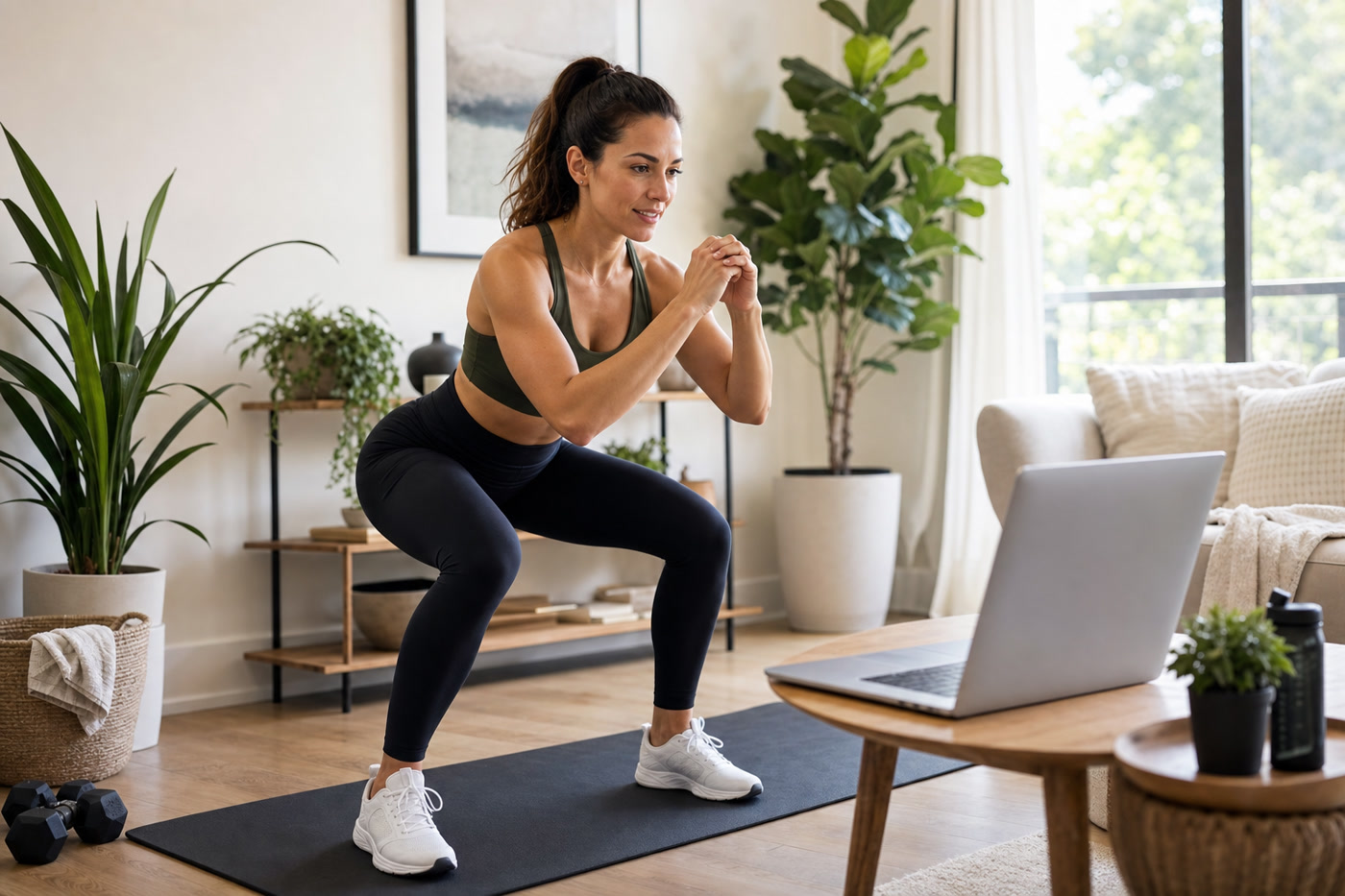
Online Training Produces Equivalent Results to In-Person
First, the question many women ask: does online training actually work as well as in-person?
Yes. A 2024 randomized clinical trial by Peña et al. (International Journal of Exercise Science) found that remote and in-person training produced statistically equivalent results for muscle mass increase, fat mass reduction, LDL cholesterol reduction, and grip strength (large effect size, Cohen’s d ≈ 1.20). The medium doesn’t determine the result — the quality of the programme does.
Why Individualized Programmes Outperform Generic Ones
The data on this is unambiguous. Teixeira et al. (2024, International Journal of Behavioral Nutrition & Physical Activity) conducted a randomized controlled trial showing individualized exercise prescription produced 77% higher session attendance compared to standard prescription (14.35 vs. 8.13 sessions over 8 weeks, p=0.018). The effect was maintained across the entire follow-up with no diminution.
Attendance is everything. The best programme in the world produces nothing if you stop doing it.
And why do people stop? Because the programme doesn’t feel right for them. It’s too hard, or too easy, or doesn’t match their schedule, or doesn’t address what they actually care about. Generic programmes cannot solve any of these problems. A custom programme with weekly check-ins solves all of them.
Why One-Size-Fits-All Fails for Posture Correction Specifically
Ludwig et al. (2024) demonstrated that 4 distinct muscle activation clusters exist among healthy people attempting to correct their pelvic tilt — different individuals preferentially use the abdominals, dorsal muscles, or gluteus maximus. A single exercise prescription cannot optimize for all four strategies.
In other words: the “best posture exercise” for you might produce minimal results for the next person — because their nervous system uses a different motor strategy to control pelvic position. Without assessment, you cannot know which strategy your body uses. Without knowing that, you cannot select the right exercises.
This is the technical reason why TurnFit’s results are different. It’s not mystical — it’s a function of assessment-led, individualized programming versus template-based generic content.
The Cost Argument (Addressed Directly)
Yes — TurnFit’s custom online training is priced higher than a generic app or a cookie-cutter online plan. Here is what you are paying for:
- A fully individualized movement assessment before your programme is written
- A programme built around your specific postural deficits, goals, schedule, and available equipment
- No two clients receive the same programme
- Weekly check-ins with programme updates based on your actual progress
- A BCRPA certified trainer with 240+ Google reviews and 8 consecutive Vancouver Top Choice Awards
- Training that addresses the root cause — not just the symptom
The alternative is spending 12 months on an app that doesn’t address your postural patterns, doesn’t see that your glutes aren’t firing, and doesn’t update your programme when you plateau. The cost of a cheap generic programme is measured in wasted time, continued pain, and goals not reached.
The TurnFit Difference
TurnFit Personal Trainers has earned over 240 Google reviews and 8 consecutive Top Choice Awards in Vancouver — not by doing what every other trainer does, but by building a methodology that produces results when other approaches have failed.
What Makes TurnFit Different
- Posture-first methodology: We correct the root cause before adding load. Most trainers skip this and wonder why their clients plateau.
- Full kinetic chain assessment: From foot mechanics to cervical spine. No other online training provider we know of includes foot mechanics in the initial assessment.
- Glute activation as a prerequisite: We confirm glutes are actually firing before programming glute exercises. This is the difference between training the glutes and training the hamstrings and lower back instead.
- Mental health integration: We explicitly programme for mood, stress, and confidence alongside physical outcomes — because we’ve seen these change lives, not just bodies.
- Weekly updates: Your programme changes with you. No set-it-and-forget-it templates.
- Evidence-based: Everything we do is grounded in peer-reviewed research. We follow the science and update our approach when the science updates.
- 90% female clientele: We understand the specific physiology, hormonal context, and lived experience of women training for health, aesthetics, and performance.
Who TurnFit Is For
- Women who have tried generic programmes and plateaued
- Women with lower back pain, neck tension, or postural discomfort who want to fix the root cause
- Women whose glutes don’t grow or don’t feel activated during training
- Women who want the mental health benefits of fitness alongside the physical changes
- Women anywhere in Canada who want truly custom online personal training
- Women who are ready to invest in a programme that works — and come with the expectation that it will
The TurnFit 12-Week Custom Training Roadmap
Here’s what a custom TurnFit online training programme looks like in practice — based on our most common client journey.
Phase 1: Weeks 1–4 — Activate the Foundation
Focus: Posture correction, deep core activation, glute wake-up, foot mechanics, movement pattern re-education
What happens: Your nervous system begins learning new activation patterns. Glutes start firing during movements they’ve never worked in. Deep core timing improves. Most clients report that their back feels noticeably better by week 2–3, and that they feel their glutes “working” for the first time during week 3–4.
Science basis: Selkow et al. (2017) showed 4 weeks produces significant TrA activation improvements. Kaushika et al. (2024) showed 6 weeks is sufficient to correct APT. The first month lays the neurological groundwork for everything that follows.
Phase 2: Weeks 5–8 — Build Strength on Corrected Patterns
Focus: Progressive resistance training — hip thrusts, squats, deadlifts, single-leg exercises, upper body and shoulder stability
What happens: Now that the glutes are firing and the core is stabilizing, loading actually targets the muscles it’s supposed to. This is where visible physical changes begin: glute hypertrophy, improved muscle tone, posture improvements that others notice. Mental health benefits peak during this phase — mood, energy, and confidence measurably improve.
Science basis: Kassiano et al. (2024) found +9.3% gluteus maximus thickness from hip thrust programming in 10 weeks. Resistance training reduces anxiety 41.6% and depression 34% by week 12 — Cunha et al. (2025).
Phase 3: Weeks 9–12 — Progressive Overload and Integration
Focus: Volume and intensity increase progressively; movement patterns become automatic; full-body integration exercises
What happens: Posture corrections become default — clients stop thinking about them and simply live in their corrected alignment. Physical changes compound: glute and overall muscle development accelerates, fat loss continues, strength numbers move consistently. The transformation becomes visible and measurable.
Ongoing: After 12 weeks, your programme continues to evolve. Clients who stay with TurnFit for 6–12 months describe it as the most significant physical and mental transformation of their adult lives — not because of one dramatic moment, but because every week the programme meets them exactly where they are.
Ready to Start Your Custom Programme?
Book your free movement assessment with TurnFit. We’ll evaluate your posture, movement patterns, and goals — and show you exactly what your custom programme will address.
Frequently Asked Questions
Why aren’t my glutes growing even though I train them consistently?
The most common cause is anterior pelvic tilt (APT) — a forward pelvic tilt caused by tight hip flexors from prolonged sitting. APT reciprocally inhibits the gluteus maximus, suppressing it even during exercises designed to target it. Kim & Kim (2015) showed APT significantly alters gluteus maximus firing during hip extension exercises. The fix is posture correction before progressive loading — not more sets of hip thrusts on a dysfunctional pattern.
Can posture correction really make my glutes grow without heavy lifting?
Yes. When APT is corrected, the nervous system removes the inhibition on the glutes. Every movement suddenly recruits more gluteal motor units. TurnFit clients regularly report visible glute growth and a perkier appearance within one month — before heavy lifting has even begun. This is a documented neurological phenomenon confirmed by Ludwig et al. (2024).
How does online personal training compare to in-person for results?
Equivalent. A 2024 randomized clinical trial (Peña et al.) found remote and in-person training produced statistically identical improvements in muscle mass, fat loss, and grip strength. The quality of the programme and the personalization determine results — not the medium.
How quickly can I correct my posture with TurnFit?
Most clients see measurable improvements in 4–6 weeks. Research shows APT corrects in 6–8 weeks (Kaushika et al., 2024), forward head posture improves in 6–10 weeks (Ali et al., 2025), and pain reduction appears in 4–8 weeks (Lee & Lee, 2015). Neurological improvements — better muscle activation, reduced discomfort — often appear within 2–3 weeks.
Why is TurnFit more expensive than other online trainers?
Because you receive a fully individualized programme — not a template. Teixeira et al. (2024) found individualized programmes produce 77% higher attendance than standard ones. TurnFit includes a full movement assessment, posture analysis, weekly programme updates, and continuous trainer communication. You’re also working with a BCRPA certified trainer with 240+ reviews and 8 Top Choice Awards.
What results can I expect in 12 weeks?
Based on TurnFit client outcomes and the research: measurably improved posture within 4–6 weeks; noticeable glute changes by week 4–8; 62.3% pain reduction for those with lower back pain (Ali et al., 2025); 41.6% anxiety reduction and 34.2% depression reduction from resistance training in 12 weeks (Cunha et al., 2025); and visible physical transformation by week 12.
Is TurnFit right for me if I have lower back pain?
Yes — this is one of TurnFit’s specialities. Research shows 62.3% pain reduction from targeted core stability and glute activation training in women with chronic lower back pain. Amabile et al. (2017) found women with chronic back pain have significantly smaller gluteus maximus than healthy controls — glute activation is both the cause and the cure.
Do I need a gym for TurnFit’s online training?
No. TurnFit designs programmes around your available equipment — home, gym, or minimal setup. The initial posture correction and activation phase requires almost no equipment. Equipment recommendations are added progressively as your programme advances.
How do I start?
Book a free assessment call at turnfit.ca/assessment/. Your trainer will evaluate your movement, posture, goals, and schedule. You’ll leave understanding exactly what is holding you back and what your custom programme will target.
The Body You’ve Been Training For Is Closer Than You Think
If you’ve been working hard and not seeing the results you deserve, the problem is almost certainly not your effort. It’s that no one has addressed the root cause — the postural patterns, the inhibited glutes, the dormant deep core, the movement compensations that have been running quietly in the background of every workout you’ve ever done.
TurnFit’s custom online personal training is designed to fix exactly this — for women, from anywhere in Canada, starting with a free movement assessment that gives you answers you can act on immediately.
This isn’t a generic programme. It isn’t a fitness app. It’s a real trainer, a real assessment, and a real custom programme built around your body, your goals, and your life.
300+ women have already made the decision. The results speak for themselves.
Scientific References
View all 30+ cited studies
- Gordon BR, McDowell CP, Hallgren M, et al. “Association of Efficacy of Resistance Exercise Training With Depressive Symptoms.” JAMA Psychiatry. 2018;75(6):566. View study
- Cunha PM, et al. “Progressive resistance training reduces depression and anxiety in older women.” Psychiatry Research. 2025. View study
- Ludwig O, et al. “Muscular Strategies for Correcting the Pelvic Position.” J Funct Morphol Kinesiol. 2024;9(1):25. View study
- Kim T, Kim YW. “Effects of abdominal drawing-in during prone hip extension on muscle activities.” J Phys Ther Sci. 2015;27(2):383. View study
- Pereira B, et al. “Muscle activation in pelvic anteversion and retroversion.” Fisioterapia em Movimento. 2021. View study
- Amabile AH, Bolte JH, Richter SD. “Atrophy of gluteus maximus among women with chronic low back pain.” PLOS ONE. 2017. View study
- Kassiano W, et al. “Addition of The Barbell Hip Thrust Elicits Greater Increases in Gluteus Maximus Muscle Thickness.” Int J Strength Cond. 2024. View study
- Krause Neto W, et al. “Impact of resistance training on gluteus maximus hypertrophy.” Front Physiol. 2025. View study
- Barbalho M, et al. “Evidence for an Upper Threshold for Resistance Training Volume in Trained Women.” Med Sci Sports Exerc. 2019. View study
- Selkow NM, et al. “Transversus Abdominis Activation and Timing Improves Following Core Stability Training.” IJSPT. 2017. View study
- Ali ZA, et al. “Neuromotor adaptation trajectories in response to core stability training.” J Biomed Res. 2025. View study
- Frizziero A, et al. “Efficacy of Core Stability in Non-Specific Chronic Low Back Pain.” J Funct Morphol Kinesiol. 2021;6(2):37. View study
- Teixeira DS, et al. “Individualized exercise prescription and adherence.” Int J Behav Nutr Phys Act. 2024. View study
- Peña A, et al. “Remote vs. in-person resistance training — equivalent outcomes.” Int J Exerc Sci. 2024. View study
- Braga UM, et al. “Effects of medially wedged insoles on lower limb kinematics.” Gait Posture. 2019. View study
- Turgut E, Yagci G, Tunay VB. “Hip Neuromuscular Exercise Reduces Foot Pronation.” J Sport Rehabil. 2021. View study
- Dhahbi W, et al. “Joint-by-Joint Approach: Ankle and Hip Mobility.” Biol Sport. 2025. View study
- Farooq A, et al. “Trunk and pelvic posture effects on hip and thigh muscle activation.” BMC Sports Sci Med Rehabil. 2014. View study
- Kaushika E, et al. “Gluteus Maximus Activation for Pelvic Tilt Correction.” Int J Physiother Occup Ther. 2024. View study
- Lynders C. “The Critical Role of the Transversus Abdominis in Low Back Pain.” HSS Journal. 2019. View study
- Nipa N, et al. “Combined core stability and pelvic floor exercise.” Advances in Urology. 2022. View study
- Strickland JC, Smith MA. “The anxiolytic effects of resistance exercise.” Front Psychol. 2014. View study
- Oftedal S, et al. “Resistance training and depression/anxiety in 5,180 women.” Prev Med. 2019. View study
- Lee KJ, et al. “Effect of posture correction program on musculoskeletal pain.” J Phys Ther Sci. 2015. View study
- Ali TI, et al. “Hip extensor exercises and forward head posture.” J Back Musculoskelet Rehabil. 2025. View study
- Kissman J, et al. “Gluteal muscle central activation in patellofemoral pain.” Front Physiol. 2025. View study
- Semciw A, et al. “Exercises for Gluteus Medius and Minimus.” IJSPT. 2020. View study
- Shiina I, et al. “Muscle activity during active pelvic tilting.” Phys Ther Res. 2016. View study
- Bogdanis GC, et al. “Exercise and Cortisol Response.” Rev Endocr Metab Disord. 2022. View study
- Lee H. “Ankle dorsiflexion activates the pelvic floor.” Med Sci Monit. 2018. View study
Ready to Get Started?
Whether you’re in Vancouver or anywhere across Canada, TurnFit builds programs around your life, your goals, and your body. Book your free assessment today — no commitment, just results.
In-person training in Kitsilano & Downtown Vancouver · Custom online training Canada-wide · Corporate wellness programs
Explore our online personal training options, work with us as your online personal trainer in Canada, and Book your free intro call.
Ready to Start Your Fitness Journey?
At TurnFit, we offer in-person personal training at our Kitsilano and Downtown Vancouver locations, online coaching programs with live Zoom calls, and online personal training across Canada. Check out our transparent pricing — no contracts, no hidden fees.
Book a Free 5-Minute Call →