TL;DR: A well-run 12-week corporate wellness program moves through four phases — baseline assessment, movement and habit formation, progressive loading with nutrition, and performance measurement with handoff systems. Vancouver employers who commit to this arc typically see rising participation, measurable biometric shifts, and improved self-reported energy and pain levels by week 12, delivered through 4-hour on-site blocks where two coworkers train at a time. Prevention is the financial logic: absent and disengaged employees cost far more than the program itself.
Inside a 12-Week Corporate Wellness Program: What Vancouver Employers Actually Get
By David Turnbull, TurnFit Founder & Head Coach
Most HR teams evaluating a corporate wellness program are working from a proposal PDF and a sales call. Few get to see what actually happens week to week. This is that walkthrough — the real structure behind a 12-week on-site engagement, what changes we track, and what most employers don’t anticipate before it starts.
What Does a Corporate Wellness Program Actually Involve?
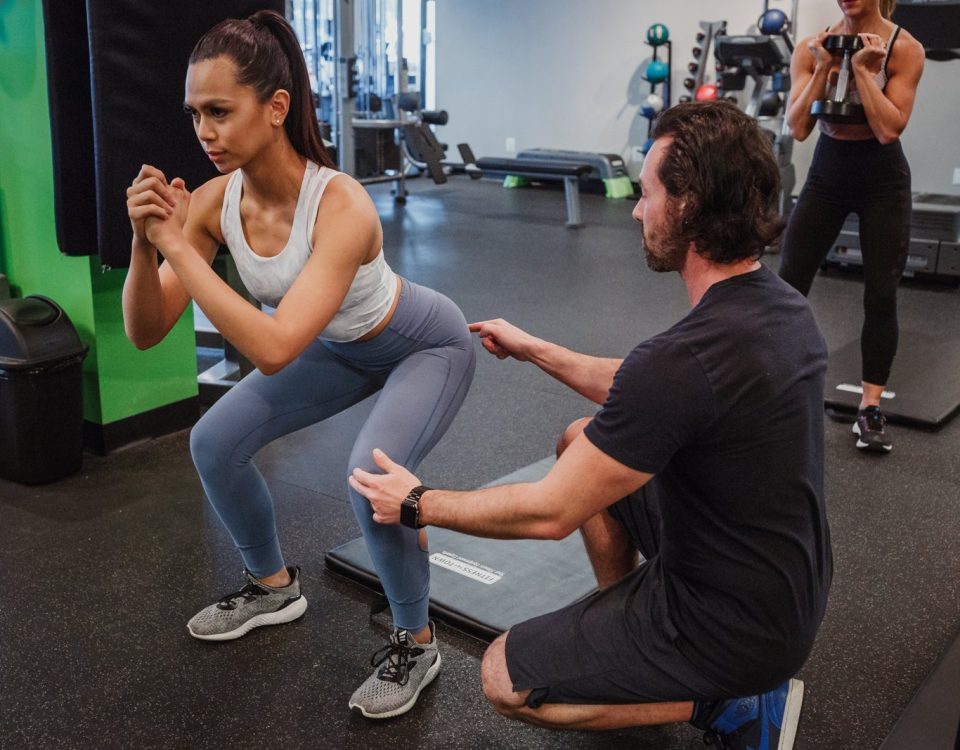
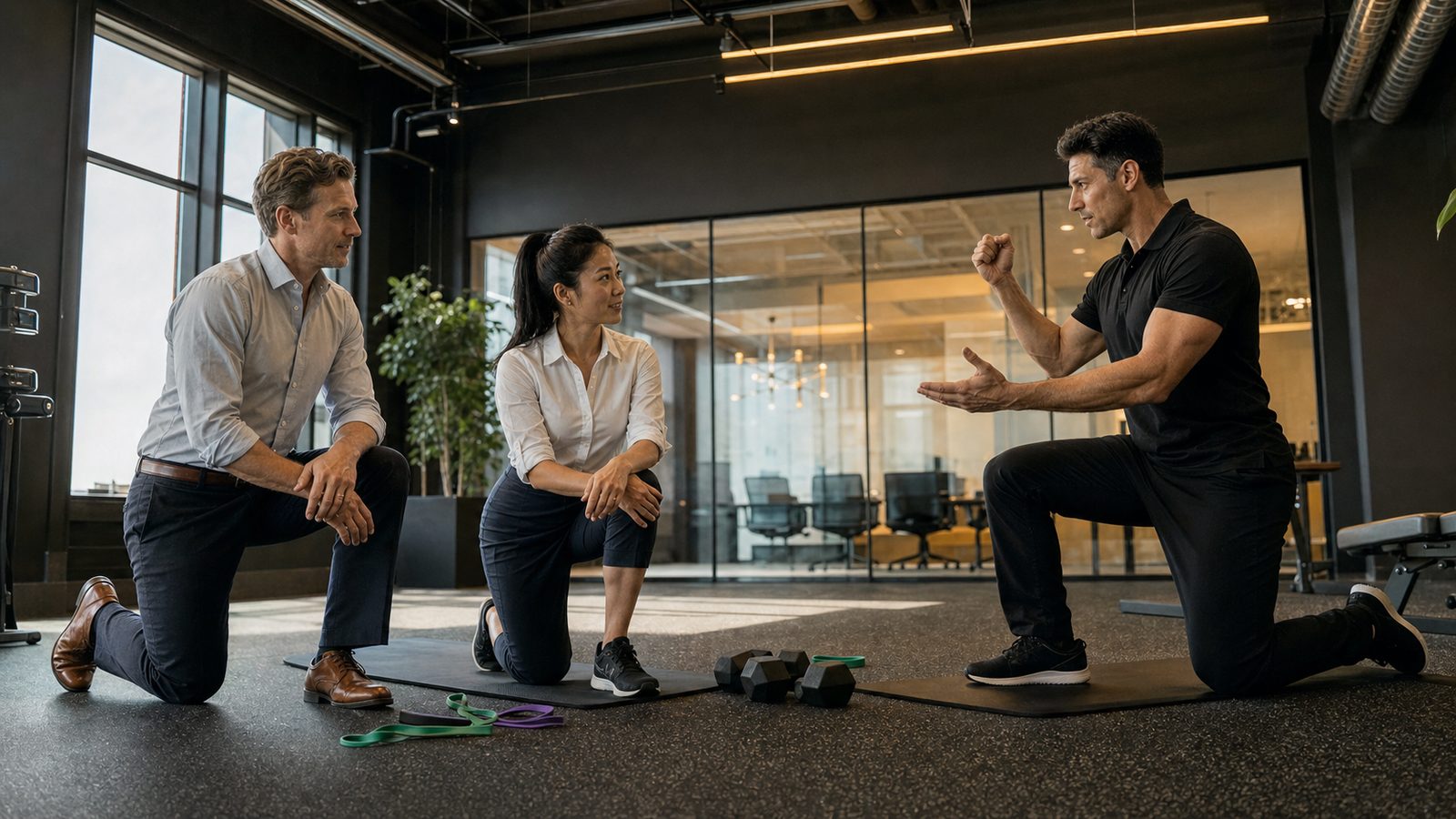
At its core, a corporate wellness program is structured physical training and health coaching delivered on-site or hybrid, designed to reduce injury risk, absenteeism, and burnout while improving day-to-day energy and focus. TurnFit delivers this through 4-hour on-site blocks, with two coworkers training together at a time in focused sessions, plus homework assignments between visits to keep progress compounding outside the scheduled block. It is not a one-off lunch-and-learn or a step-count challenge — it’s a structured coaching relationship applied to a workforce.
Why Should Vancouver Employers Think About This as Prevention, Not Perk?
Canada’s healthcare system responds after an employee is already injured, burned out, or on leave — by then, the cost has already landed on both the employee and the employer. Deloitte’s analysis of workplace mental health investment across seven Canadian companies found a median return of $1.62 for every dollar spent on programs in place for one year, rising to $2.18 for programs sustained three years or more (Consulting.ca summary of Deloitte’s report, full report at Deloitte Canada). The same analysis found mental health issues alone account for 30–40% of short-term disability claims and roughly $6.3 billion in annual indirect costs to Canadian employers from lost productivity. Physical wellness sits alongside — and often underneath — that same cost structure.
What Does Absenteeism Actually Cost a Canadian Employer?
Statistics Canada tracks average days lost per full-time worker annually through the Labour Force Survey, a figure used across HR and policy circles to estimate the scale of workplace absence (Statistics Canada fact-sheet on work absences). Separately, physical inactivity alone is estimated to cost the Canadian healthcare system at least $3.9 billion annually in direct and indirect costs, according to a 2023 CFLRI/CPRA analysis of the economic burden of inactivity (The Price of Inactivity report). Neither figure is abstract to an HR budget — both show up as replacement staffing, overtime, and reduced output long before anyone files a claim.
| Cost driver | Data point | Source |
|---|---|---|
| Mental health program ROI (1 year) | $1.62 return per $1 spent | Deloitte Canada |
| Mental health program ROI (3+ years) | $2.18 return per $1 spent | Deloitte Canada |
| Mental health share of short-term disability claims | 30–40% | Deloitte Canada |
| Physical inactivity cost to Canadian healthcare system | At least $3.9 billion/year | CFLRI/CPRA, 2023 |
| Full-time worker absence tracking | Annual days-lost data by occupation and sector | Statistics Canada |
What Happens in Week 1?
Week 1 is entirely about establishing a real baseline — not guessing. Each participating employee goes through an individual movement and posture assessment, similar in spirit to the intake process behind our public fitness assessment, adapted for a workplace cohort. This typically includes:
- Posture and movement-pattern screening (identifying compensations before they become injuries)
- Basic biometric markers employees consent to share (e.g., resting heart rate, grip strength, mobility ranges)
- A short self-reported survey on energy, pain points, and stress levels
- Individual goal-setting within the group format
This is also when we set expectations with HR about what the program can and cannot promise — a theme we return to later.
What Happens in Weeks 2 Through 4?
Weeks 2–4 focus on movement pattern correction and habit formation rather than intensity. Employees are still learning how to squat, hinge, push, and pull correctly under load, and the coaching emphasis is on consistency of attendance over how much weight is on the bar. Homework between sessions — short mobility routines or walking targets — starts building the habit infrastructure that determines whether the back half of the program actually works.
What Happens in Weeks 5 Through 8?
This is where progressive loading begins in earnest, layered with a nutrition component addressing the realities of a workday — protein at lunch, hydration, energy crashes tied to blood sugar swings rather than actual fatigue. Sessions become more individualized within the two-at-a-time format, since by this point coaches understand each employee’s baseline limitations and goals. This phase is typically when participants first report noticeable changes in energy and reduced everyday aches.
What Happens in Weeks 9 Through 12?
The final phase re-measures everything captured in week 1 — posture, mobility, biometric markers, and the same self-reported energy and pain survey — so HR sees an actual before-and-after rather than anecdotes. Equally important is the handoff: building a plan for how employees sustain progress after the formal engagement ends, whether that’s continuing independently, moving into online coaching, or renewing the on-site program.
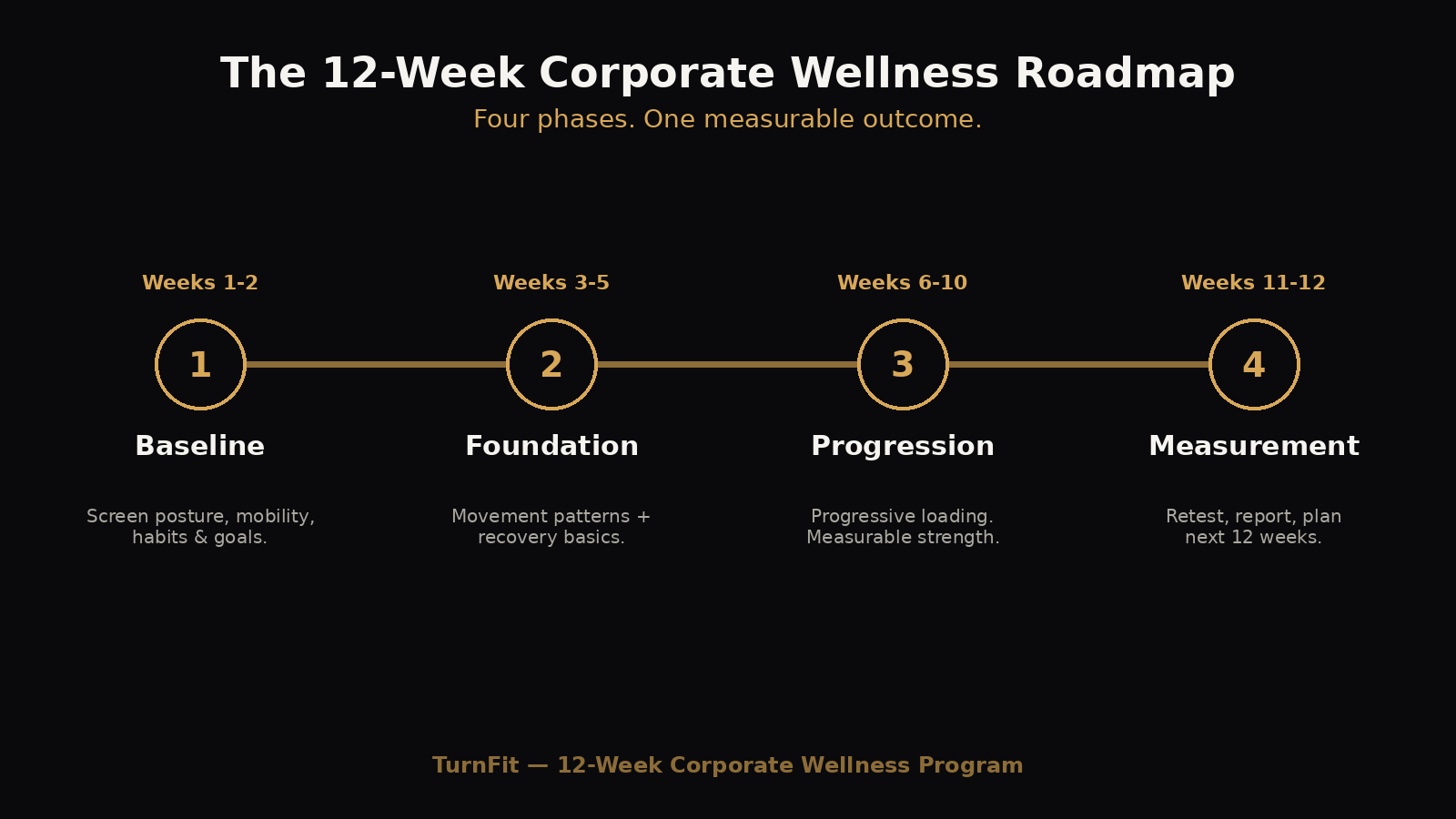
| Phase | Weeks | Focus | What HR sees |
|---|---|---|---|
| 1. Baseline | Week 1 | Assessments, goal-setting | Individual and aggregate baseline data |
| 2. Foundation | Weeks 2–4 | Movement patterns, habit formation | Attendance and engagement trends |
| 3. Progression | Weeks 5–8 | Progressive loading, nutrition layer | Early self-reported energy/pain shifts |
| 4. Measurement | Weeks 9–12 | Re-testing, handoff planning | Biometric deltas, participation rates, sustainability plan |
What Metrics Does HR Actually Get at the End?
Employers typically receive an aggregate (not individually identifying) summary covering three categories:
- Participation rates — session attendance and homework completion trends over the 12 weeks
- Biometric shifts — aggregate movement, mobility, and basic fitness marker changes from week 1 to week 12
- Self-reported outcomes — energy levels, pain points, and stress ratings, compared pre- and post-program
These are directional indicators, not a clinical trial — but they give HR something concrete to bring back to leadership beyond “employees seemed to like it.”

What Does the 4-Hour On-Site Block Actually Look Like?
Each on-site visit is a 4-hour block during which coaches work with employees in pairs — two coworkers training together at a time — which keeps sessions personal without requiring an entire day of staff downtime. This format also builds a light accountability layer, since coworkers training together tend to show up for each other even on weeks when motivation dips. Homework between visits extends the block’s impact without requiring additional on-site time.

What Do Employers Commonly Overlook Before Starting?
- Underestimating scheduling logistics — coordinating pairs of employees across departments takes more planning than expected
- Expecting week-1 results — the biggest shifts show up in weeks 5–12, not the first few sessions
- Skipping the nutrition layer — movement alone without addressing workday eating patterns limits the ceiling on results
- No internal champion — programs with a visible internal advocate (not just HR sending calendar invites) see materially higher participation
- Treating it as one-and-done — a single 12-week block builds momentum, but sustained results come from renewal or transition into ongoing coaching
What’s a Realistic, Honest Expectation for 12 Weeks?
Twelve weeks is enough time to build genuine movement competence, establish habits, and see measurable early biometric and self-reported change — it is not enough time to reverse years of sedentary work patterns for every participant. Programs that oversell “transformation” in this timeframe set HR up to defend disappointing outcomes later. The honest framing is that 12 weeks builds the foundation; the return compounds the longer the relationship continues, consistent with the multi-year ROI pattern Deloitte found in its own research (Deloitte Canada).
How Does This Compare on Cost?
Cost depends heavily on employee count, session frequency, and program length. We’ve broken down real numbers in our dedicated guide on what corporate wellness costs in Vancouver, and the ROI math specifically in our corporate wellness ROI breakdown. If you’re still building the internal case for a program, our guide on launching a workplace wellness initiative covers how to structure that pitch to leadership.
Key Takeaways
- A 12-week corporate wellness program moves through four phases: baseline, foundation, progression, and measurement
- TurnFit delivers this via 4-hour on-site blocks, two coworkers training at a time, plus homework between sessions
- HR receives aggregate participation rates, biometric shifts, and self-reported energy/pain data by week 12
- Deloitte found workplace mental health programs return $1.62–$2.18 per dollar spent, growing with program tenure
- Physical inactivity costs the Canadian healthcare system at least $3.9 billion annually — a cost employers indirectly share
- Twelve weeks builds the foundation; sustained ROI comes from continuing the relationship, not a single cycle
Frequently Asked Questions
How many employees can go through a 12-week program at once?
Sessions run with two coworkers training together per time slot within each 4-hour on-site block, so total capacity depends on how many blocks are scheduled per week and the length of the engagement.
What’s the difference between this and a wellness stipend or gym membership perk?
A stipend assumes employees already have the knowledge and motivation to train effectively on their own. A structured program provides assessment, coaching, and accountability — which is why it shows measurable participation and outcome data that a stipend typically cannot produce.
Do employees need to be already fit to join?
No — the program is built around individual baseline assessments in week 1, so coaching is calibrated to each employee’s current movement ability and goals, not a fixed fitness standard.
What results can HR expect to report to leadership after 12 weeks?
Typically: participation and attendance trends, aggregate biometric shifts from baseline, and self-reported changes in energy, pain, and stress. These are directional workplace indicators, not clinical outcomes.
Is there evidence that workplace wellness programs actually pay off financially?
Deloitte’s analysis of seven Canadian companies found a median ROI of $1.62 per dollar spent on mental health programs in year one, rising to $2.18 for programs sustained three or more years (Deloitte Canada).
What happens after the 12 weeks end?
The final phase includes a structured handoff plan — continuing independently, transitioning to online coaching, or renewing the on-site engagement to build on the momentum from the first cycle.
How is this different from a single wellness workshop or lunch-and-learn?
A workshop delivers information once. This program delivers structured coaching, progressive loading, and measurement over 12 consecutive weeks — closer to a fitness program than an event.
Ready to See What This Looks Like for Your Team?
Prevention is cheaper than the alternative — absent, injured, or burned-out employees cost far more than a structured program ever will. Book an assessment call to talk through what a 12-week engagement would look like for your workplace, or explore our full corporate wellness offering.
Ready to Start Your Fitness Journey?
At TurnFit, we offer in-person personal training at our Kitsilano and Downtown Vancouver locations, online coaching programs with live Zoom calls, and online personal training across Canada. Check out our transparent pricing — no contracts, no hidden fees.
Book a Free 5-Minute Call →