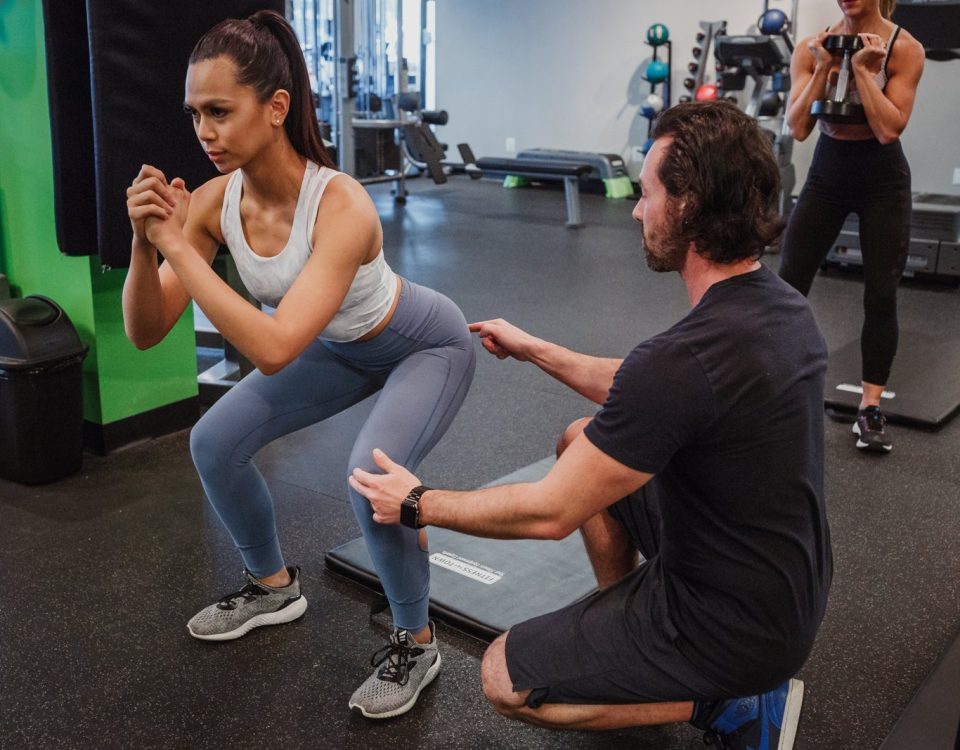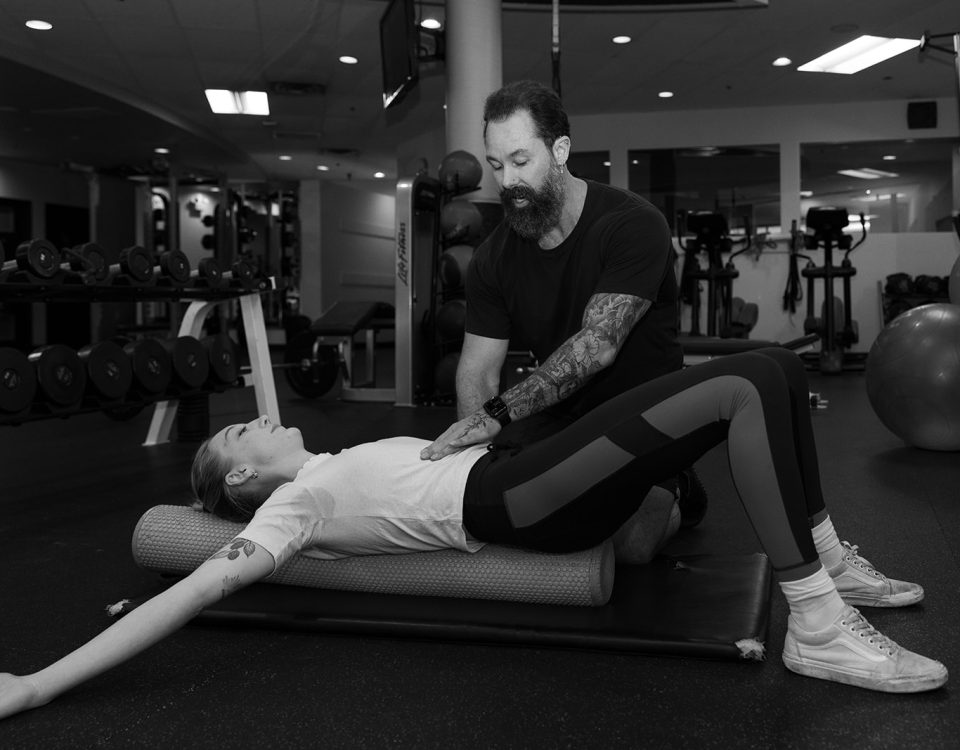
Most people search for ways to feel less stressed or sleep better and get told to meditate, breathe, or take a supplement. Rarely does anyone tell them to look at their muscles and posture. At TurnFit, we see it every week: when clients start using their muscles in a healthy way—with resistance training, better posture, and targeted mobility—they report feeling calmer, thinking more clearly, and sleeping more deeply. Research now backs this up: strength training for mental health is emerging as a powerful tool for improving mood, reducing anxiety, and supporting overall well-being.
How Tight or Weak Muscles Affect Your Brain
Your muscles and your brain are in constant conversation through your nervous system. Every muscle has sensors that tell your brain how much tension and stretch is in the system so it can decide how safe it is to move. When muscles are chronically tight, that tightness is often a protective decision from your brain—not just a knot in the muscle. The brain may be guarding an area it perceives as unstable, which shows up as stiffness in the neck, shoulders, hips, or low back.
Posture, Breathing, and the Stress Loop
Posture is more than standing up straight—it directly affects your breathing and your stress response. When you slump with your head forward and chest collapsed, your rib cage and diaphragm cannot move freely, so you default to shallow chest breathing. Shallow breathing is a classic signal to the brain that you are under threat. Improving posture by stacking the ribs over the pelvis, opening the chest, and gently lengthening the spine encourages deeper, slower breathing, which supports lower stress and better emotional regulation.
What Science Says About Strength Training for Mental Health
Research is catching up to what lifters have felt for years: strength training is one of the most effective forms of exercise for mental health. Across multiple reviews and studies, resistance training is consistently linked with improved mood, reduced anxiety, better cognitive function, and improved sleep quality. For example, a landmark 2018 meta-analysis in JAMA Psychiatry that pooled 33 clinical trials found resistance training produced significant reductions in depressive symptoms across all groups studied, regardless of age, sex, or health status. Notably, those improvements held even when participants did not get measurably stronger, which tells us the mental health benefits go far beyond the number on the bar.
- Resistance training can significantly reduce depressive symptoms.
- Low-to-moderate intensity strength work reliably reduces anxiety.
- Strength training improves focus, working memory, and stress resilience.
- Consistent lifting is associated with meaningful improvements in sleep quality.
Why Strength Training Calms the System
Strength training does not just build muscle; it teaches your nervous system that your body is capable, stable, and safe. By progressively loading your body in a controlled way, you give your brain a series of successful “I can handle this” experiences. Over time, this reduces the need for protective tension and helps your baseline muscle tone come down.
Practical Ways to Use Strength Training for Mental Health
1. Focus on Foundational Strength 2-3x per Week
Aim for 2-3 sessions per week, 2-3 sets of 8-15 reps per exercise, at an effort around 6-7 out of 10 (challenging but not crushing). Base your program on big movement patterns: squats and hinges, pushes and pulls, and core stability. Consistency and progressive challenge matter far more than maxing out every session.
2. Pair Strength With Posture Checkpoints
Throughout the day, use posture checkpoints to keep your nervous system out of constant stress mode: feet grounded, soft knees, ribcage stacked over pelvis, chest open with shoulders relaxed down, and chin slightly tucked with the crown of the head tall. Every small posture reset is a signal of safety to your brain.
3. Use Mobility and Stretching to Turn Down the Volume
Gentle mobility and stretching help lengthen tight muscles and give the brain new, calmer input. Focus on the chest and upper back, hips and hip flexors, and neck and jaw. Pair stretches with slow, extended exhalations (for example, 4 seconds in and 6-8 seconds out) to tap directly into your parasympathetic “rest and digest” system.
Sleep, Recovery, and Feeling Human Again
As your muscles get stronger and less chronically tight, your body moves more efficiently and experiences less pain and restlessness at night. That means fewer wake-ups, deeper sleep, and more of that “I actually feel human this morning” feeling.
When to Get Help Instead of DIY
Muscle tightness and low mood can sometimes be signs of underlying medical conditions, so if you experience sudden or severe weakness, major changes in movement, or prolonged low mood, always check in with a medical professional. For most people, though, a smart, personalized strength and posture program is a powerful and often overlooked lever to feel better mentally and physically.
How TurnFit Can Help
Ready to use strength training for mental health, not just for aesthetics? At TurnFit in Vancouver, we tie your posture, movement, and nervous system together so you do not just look better—you actually feel calmer, clearer, and more at home in your body. In your TurnFit assessment we will review your posture and movement to find where your body is guarding, identify key tight and weak muscle groups that may be driving your stress, and build a personalized strength and mobility plan designed to improve mood, sleep, and energy. Book a session with our Vancouver personal trainers and experience how smarter strength training can support your mental health.
Frequently Asked Questions
Is strength training good for mental health?
Yes. Research shows that strength training can significantly reduce symptoms of depression and anxiety, improve sleep, and boost overall quality of life when done consistently.
Why are my muscles so tight when I am stressed?
Stress activates your nervous system and often increases muscle tone as a protective response, especially around the neck, shoulders, jaw, and low back. Your brain is trying to guard you.
Will stretching alone fix my tight muscles?
Stretching can help temporarily, but if your brain still does not trust that area, tightness often returns. Combining strength training, posture work, and nervous-system calming techniques is usually more effective long term.
Ready to Start Your Fitness Journey?
At TurnFit, we offer in-person personal training at our Kitsilano and Downtown Vancouver locations, online coaching programs with live Zoom calls, and online personal training across Canada. Check out our transparent pricing — no contracts, no hidden fees.
Book a Free 5-Minute Call →