Vancouver’s rainy season does not have to become a training season you lose. The darker mornings, wet sidewalks, and packed fall calendars can make it tempting to wait for better weather or a quieter week. By the time that week arrives, strength, energy, and confidence may already feel harder to rebuild.
The answer is not to force yourself through a punishing workout. It is to create a fall plan that is flexible enough for real Vancouver life. As a personal trainer, I help women in Kitsilano and Downtown Vancouver keep training by adjusting the environment, the session length, and the exercise choices without lowering the standard of care.
Why weather changes your routine
Weather affects more than whether you feel like going for a walk. Rain changes your commute, your clothing, your daylight exposure, and the amount of time you want to spend outside. Fall also brings school schedules, heavier work demands, social commitments, and the mental shift from summer freedom to routine.
When a plan depends on one perfect time and one perfect location, a single disruption can cancel the whole week. A better plan has a primary option, a shorter backup, and a minimum version for difficult days. You are not making excuses; you are designing for consistency.
Build a three-layer fall training plan
Your first layer is the full session. For many women, that means two or three weekly strength sessions of approximately forty-five to sixty minutes. Use a warm-up, a few major movement patterns, and a short finish. The purpose is to train the whole body consistently, not to leave every muscle exhausted.
Your second layer is the condensed session. If a meeting runs late or the weather turns ugly, complete twenty to thirty minutes. Choose one lower-body movement, one upper-body push, one upper-body pull, and one trunk or carry exercise. Two focused rounds can be enough to maintain the rhythm of training.
Your third layer is the minimum session. On a genuinely overloaded day, do ten minutes of movement preparation and one set of each exercise. This is not the session that produces every adaptation, but it keeps the habit alive and gives you information about how your body feels. A minimum session can prevent one missed workout from turning into a missed month.
The four patterns to keep through fall
- Squat or sit-to-stand. Use a goblet squat, box squat, or controlled sit-to-stand. Choose a depth that lets you keep your feet stable and your breathing steady.
- Hinge. A Romanian deadlift with dumbbells or a kettlebell trains the hips, hamstrings, and back of the body. Move slowly enough to feel the difference between bending at the hips and rounding through the spine.
- Push and pull. Pair a dumbbell press or incline push-up with a row. Balanced upper-body work supports strength for daily tasks and complements the posture habits many desk-based women need.
- Carry or brace. A suitcase carry, dead bug, side plank, or supported hold teaches the trunk to resist unwanted movement. You do not need hundreds of crunches to build useful core control.
These patterns are simple, but simple is not the same as easy. The load, range, tempo, and number of sets can be adjusted as you become more capable. If an exercise creates sharp pain, unusual weakness, or symptoms that persist, stop and ask a qualified professional for guidance.
Use Vancouver walks without making them your whole program
Fall is one of the best times to use short walks as a reliable source of activity. You might walk along the seawall when conditions are good, take a loop through Kitsilano, or add ten minutes after lunch near Downtown. When rain is heavy, use an indoor route, a mall, stairs, or short movement breaks at home.
Walking supports your heart, mood, and general activity level. It also gives you a lower-stress way to keep moving between strength sessions. But walking alone does not replace progressive resistance training if your goals include building strength, maintaining muscle, improving carrying capacity, or feeling more secure on stairs and uneven ground.
A realistic week might include two strength sessions, three ten-to-twenty-minute walks, and one longer outdoor outing when the weather cooperates. That is enough structure to make progress without turning every day into a fitness test.
Prepare for rainy mornings the night before
Reduce decisions. Put your shoes and training clothes where you can see them. Charge your headphones. Pack a small bag. Decide whether the next day is a full, condensed, or minimum session before you go to bed. If you train at a studio or with a coach, place the appointment in your calendar as a commitment to yourself, not as an optional task.
Also choose the right start time. Some women train best before work, while others have more energy at lunch or after the commute. The best time is the one that survives your actual week. You do not need to copy someone else’s morning routine to become consistent.
If mornings are dark and motivation is low, use a longer warm-up. Five minutes of easy cycling, marching, breathing, and joint movement can help your body transition from sleep to training. You are allowed to begin gently and decide how much work makes sense after you are warm.
Make the room and your posture work for you
At home, clear a small training zone rather than waiting for a perfect gym. A pair of adjustable dumbbells, a resistance band, a mat, and a stable chair can provide many options. Keep the equipment visible if that helps you remember it, and make sure the floor is dry and free of trip hazards.
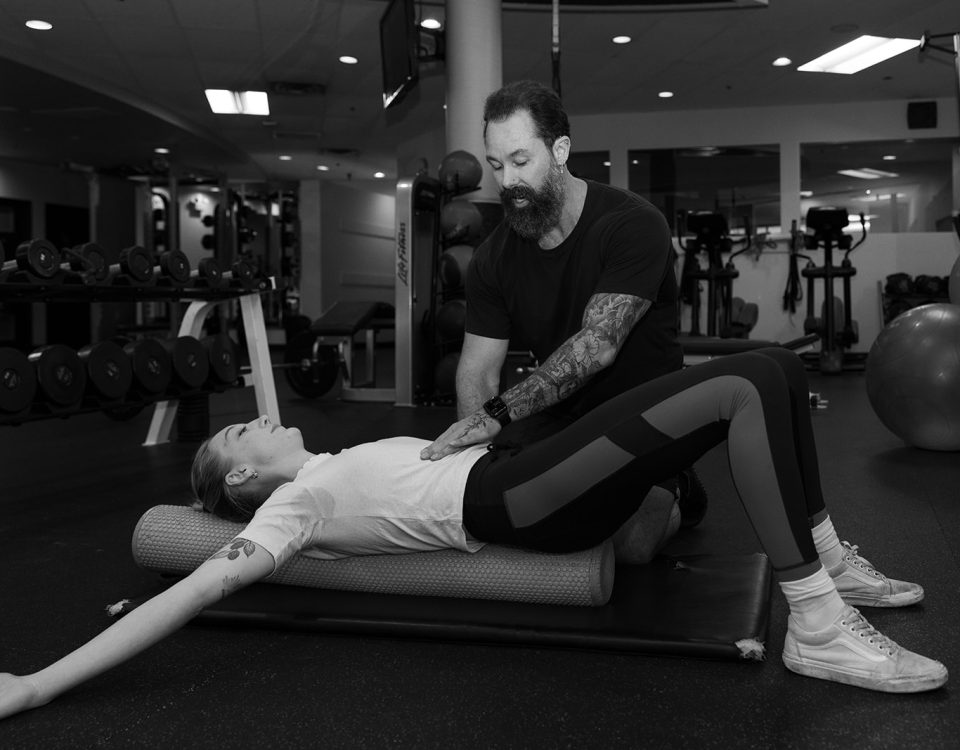
Fall often means more indoor sitting. If your neck, shoulders, hips, or upper back feel stiff, do not simply stretch harder. Combine gentle mobility with strength that helps you control the new range. TurnFit’s posture and mobility work focuses on practical movement quality for women who spend real hours at desks, in cars, and on phones.
When coaching is worth it
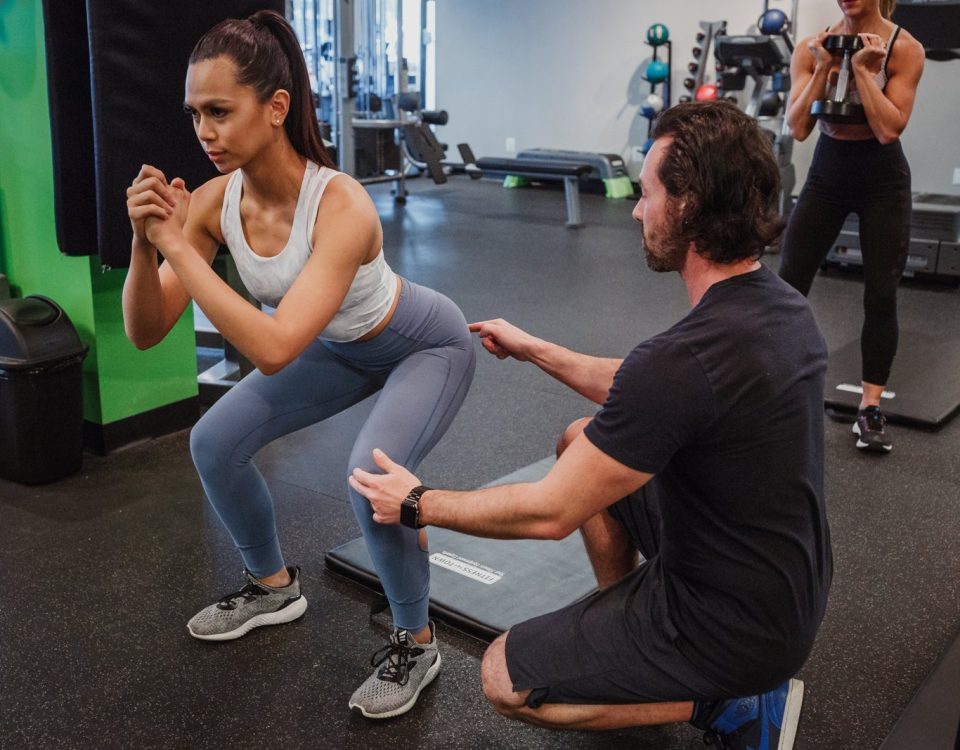
You may benefit from coaching if you keep restarting, feel unsure how to progress, or have a history of aches that makes exercise feel unpredictable. An assessment gives us a place to start. At a TurnFit assessment, we look at your goals, movement history, schedule, and current capacity rather than handing you a generic fall workout.
For women training in Kitsilano or Downtown Vancouver, in-person sessions can provide the accountability and feedback that make rainy-day consistency easier. If you are travelling, working remotely, or living outside Vancouver, online training can give you the same planning structure with equipment and sessions adapted to your home.
A fall week you can repeat
- Monday: Full-body strength session with squat, row, hinge, press, and carry.
- Tuesday: Ten-to-twenty-minute walk or indoor movement break.
- Wednesday: Condensed strength session if the week is busy; full session if energy is good.
- Thursday: Mobility, an easy walk, or a coached technique session.
- Friday: Minimum session or recovery if work and family demands are high.
- Weekend: One enjoyable outdoor activity when weather and energy allow.
You do not have to earn your way back into a routine. Start with the version of the plan you can perform this week, then improve one detail at a time: a little more load, a steadier range of motion, an extra walk, or a better recovery night.
If you want a plan that fits your body and your Vancouver schedule, book a TurnFit assessment. Rain is part of living here. It does not have to decide whether you get stronger.
Ready to Start Your Fitness Journey?
At TurnFit, we offer in-person personal training at our Kitsilano and Downtown Vancouver locations, online coaching programs with live Zoom calls, and online personal training across Canada. Check out our transparent pricing — no contracts, no hidden fees.
Book a Free 5-Minute Call →