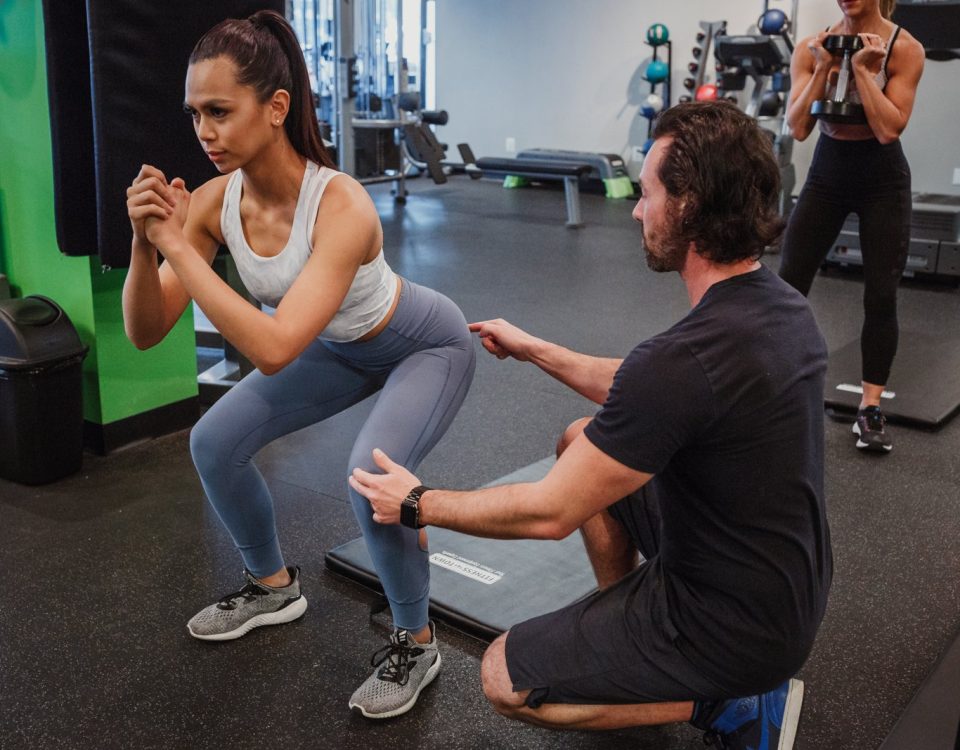
A full calendar does not mean you have to choose between getting stronger and keeping up with work, family, travel, and the rest of your life. For many Canadian women between 35 and 55, the most useful home program is not a six-day challenge. It is a repeatable thirty-minute plan with enough structure to create progress and enough flexibility to survive a busy week.
Online training works best when it gives you more than a list of exercises. You need a plan that matches your equipment, clear coaching cues, a way to progress, and a person who can adjust the session when sleep, stress, travel, or pain changes the day. That is the difference between collecting workouts and following a training system.
What thirty minutes can accomplish
Thirty minutes is long enough to warm up, train several major movement patterns, and finish with a useful amount of work. It is not long enough to include every exercise you have ever seen, and that is a benefit. A limited session forces you to prioritize what gives you the greatest return.
For a home workout, prioritize the legs, hips, upper-body push, upper-body pull, and trunk. Use full-body movements rather than creating separate “arm day” and “leg day” plans that are difficult to maintain. With two or three sessions each week, you can practice the patterns often enough to improve without needing a huge time commitment.
The TurnFit thirty-minute template
- Minutes one to five: Prepare. March, cycle, or walk in place, then move through comfortable ranges for the hips, upper back, shoulders, and ankles. The warm-up should help you feel more ready, not tired.
- Minutes five to fifteen: Lower-body strength. Perform a squat or sit-to-stand and a hinge such as a Romanian deadlift. Alternate the movements so one area can recover while the other works.
- Minutes fifteen to twenty-five: Upper body and trunk. Pair an incline push-up or dumbbell press with a row, then add a carry, dead bug, or supported plank. Use controlled repetitions rather than rushing to finish.
- Minutes twenty-five to thirty: Review and reset. Walk slowly, breathe, and note how the session felt. Record the load, repetitions, or variation so you know what to repeat or progress next time.
This is a template, not a prescription. If you are returning from an injury, pregnant or recently postpartum, managing a medical condition, or experiencing new symptoms, get appropriate professional guidance before changing your exercise routine.
A simple home workout with options
Start with two rounds of the following movements. Rest as needed and leave a few controlled repetitions in reserve.
- Squat: Sit-to-stand from a chair, bodyweight squat, or goblet squat.
- Hinge: Hip hinge to a wall, backpack Romanian deadlift, or dumbbell Romanian deadlift.
- Push: Wall push-up, counter push-up, incline push-up, or dumbbell floor press.
- Pull: Resistance-band row, backpack row, or one-arm dumbbell row supported on a chair.
- Trunk: Dead bug, side plank from the knees, or suitcase carry around the room.
Choose the variation that lets you keep your breathing and alignment under control. A counter push-up is not a lesser exercise than a floor push-up; it is the appropriate challenge if it allows you to train consistently. As your strength improves, lower the surface, add resistance, or increase the repetitions gradually.
How to progress without making workouts longer
Progress does not always mean adding another day or extending every session. You can add one or two repetitions, use a slightly heavier dumbbell, slow the lowering phase, improve your range of motion, or reduce a rest period modestly. Change one variable at a time and repeat it long enough to learn whether it works.
Keep a simple log. Write down the exercise, variation, load, repetitions, and a short note about how you felt. When you can complete all the planned repetitions with steady form for two sessions, consider a small progression. If technique breaks down or recovery worsens, hold the load or step back to an easier variation.
Do not judge a home plan by soreness. Soreness is not a reliable measure of progress, and chasing it can make the next session harder. The goal is to accumulate good training over months.
Make the plan survive travel and busy weeks
Set up three versions of the workout. The full version uses your normal equipment and thirty minutes. The travel version uses bodyweight and a resistance band for twenty minutes. The minimum version uses one round of squat, hinge, push, pull, and trunk work for ten minutes.
When life gets busy, choose the version that matches your capacity instead of cancelling automatically. The minimum version keeps the habit visible. When the week calms down, return to the full version without trying to make up every missed set.
Schedule your sessions like appointments. Put them on the calendar, decide where you will train, and keep your equipment close. A plan that begins with searching for a workout every day will spend much of its energy on decisions. A plan that tells you what to do next makes starting easier.
Support your posture and movement quality
Home training often happens in the same room where you work. If you sit at a laptop all day, use the warm-up to move the upper back and shoulders, then strengthen the back with rows and controlled carries. The aim is not to force your shoulders into one “perfect” position. It is to give your body more options and enough strength to use them.
TurnFit’s posture and mobility training can help you build a practical sequence around your work setup, movement history, and goals. Mobility is more useful when it is paired with control and strength, not treated as a separate performance.
When online coaching makes a difference
Online coaching is valuable when you know you need structure but your schedule or location makes regular in-person sessions difficult. At TurnFit, the process starts with an assessment of your goals, equipment, movement history, and weekly reality. From there, sessions can be selected and adjusted instead of copied from a generic library.
You can use online personal training from anywhere in Canada. Video demonstrations, progress tracking, and regular check-ins help you understand what to do and why. If a movement does not feel right, you can share feedback so the plan changes rather than forcing an exercise that does not fit.
For some women, the accountability is the most important part. A coach helps turn “I should work out” into a specific appointment with a clear starting point. That can be the difference between a plan that sits in a folder and a plan that becomes part of your week.
Measure more than body weight
Body weight can change for reasons that have little to do with your training. Track other indicators: the number of push-ups from a stable surface, the weight you can carry, how easily you rise from a chair, your energy in the afternoon, or how quickly you recover between sessions.
Take a monthly view. A thirty-minute plan may feel ordinary on a single Tuesday, but repeated over twelve weeks it can improve strength, confidence, and capacity. Consistency is the advantage you create by keeping the plan realistic.
If you want a plan built around your home, your schedule, and your goals, book a TurnFit assessment. You do not need a clear calendar to get stronger. You need a clear next session and a system you can keep returning to.
Ready to Start Your Fitness Journey?
At TurnFit, we offer in-person personal training at our Kitsilano and Downtown Vancouver locations, online coaching programs with live Zoom calls, and online personal training across Canada. Check out our transparent pricing — no contracts, no hidden fees.
Book a Free 5-Minute Call →